About this guide
Morocco Nature & Wildlife: Birds, Plants and Wild Landscapes
A practical field guide to Morocco’s birds, native plants, forests, wetlands, deserts and responsible wildlife watching — with places where nature can become part of your journey.
At a glance
A country with exceptional ecological variety
Morocco brings together Atlantic and Mediterranean coasts, Rif and Atlas mountain systems, cedar forests, argan woodlands, wetlands, steppe and Saharan landscapes.
The Convention on Biological Diversity country profile reports more than 24,000 animal species and around 7,000 plant species, with particularly high endemism for Mediterranean ecosystems.
That diversity is one reason a Morocco itinerary can move from cedar forest to oasis and desert within a relatively short journey.

A detail worth knowing
Birds: migration makes Morocco special
Morocco sits on an important Europe–Africa migration route.
GREPOM/BirdLife Morocco documents a very rich national avifauna, while current bird checklists record more than 500 species when resident, migratory and accidental records are considered.
For travelers, the most interesting habitats are wetlands, estuaries, coastal cliffs, mountain forests and desert oases.
White storks, flamingos and many raptors can be encountered seasonally, while the critically endangered Northern Bald Ibis is strongly associated with the Atlantic coast around Souss-Massa and Tamri.

Local context
Plants worth knowing in Morocco
Morocco’s landscapes are shaped by several distinctive plants and forest types.
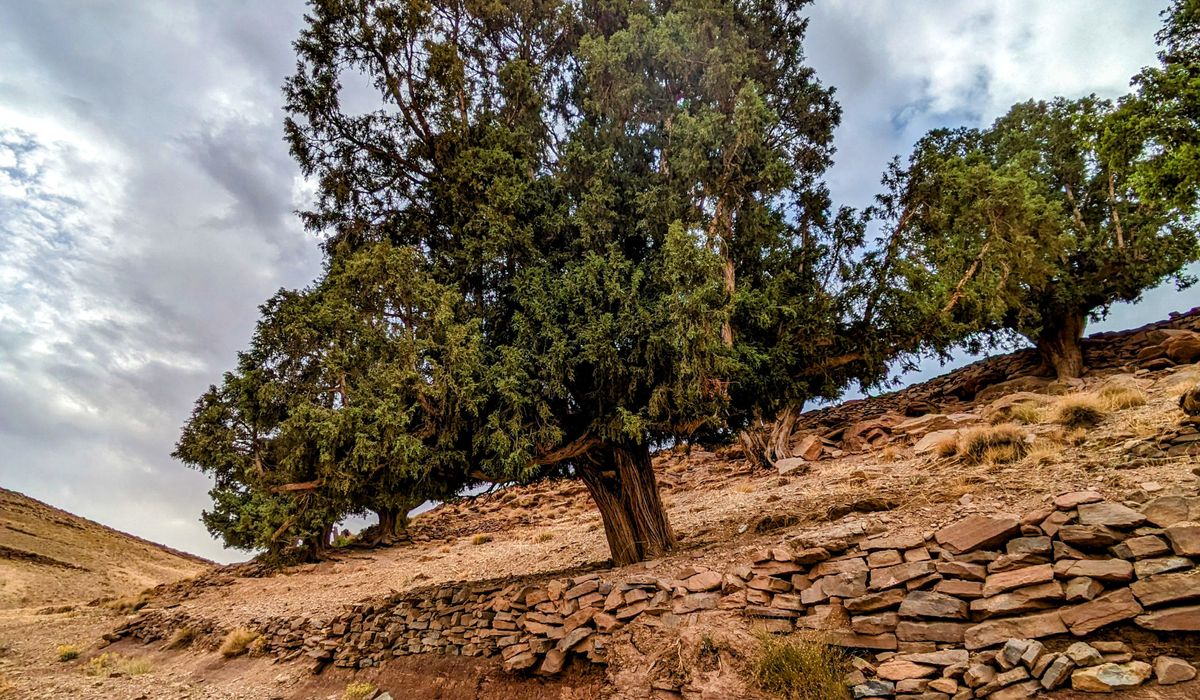
Atlas cedar (Cedrus atlantica) dominates important Middle Atlas forests; argan (Argania spinosa) characterizes the southwest; cork oak (Quercus suber), holm oak (Quercus rotundifolia), Barbary thuya (Tetraclinis articulata), junipers and Aleppo pine occur in different Mediterranean and mountain habitats.
In the Rif, Moroccan fir (Abies maroccana) is a particularly notable mountain tree.
You do not need to be a botanist: noticing how vegetation changes with altitude, rainfall and soil is one of the easiest ways to understand Morocco’s geography.

How to approach it
Birds to look for
Depending on season and habitat, birdwatchers may encounter white storks, greater flamingos, lesser kestrels, sandgrouse, desert wheatears and several raptors.
The Northern Bald Ibis is the standout conservation species of the southwest, while BirdLife has also documented breeding Egyptian Vultures in the Middle Atlas and continuing breeding of Egyptian and Bearded Vultures in Morocco’s mountain regions.
Sightings are seasonal and never guaranteed, so treat this as a field guide rather than a promise of encounters.

Timing & conditions
The Atlas cedar forests
The Atlas Cedar Biosphere Reserve in the central Atlas contains about 75% of the world’s Atlas cedar population.
Cedar forests support a distinctive mountain ecosystem and are also habitat for species such as the Barbary macaque.
Around Ifrane and Azrou, visitors can combine forest walks with cultural and mountain experiences.
These forests are living ecosystems, not just scenery: water availability, grazing, forestry and changing climate all influence their condition.

Practical insight
Argan trees and the southwest
The Arganeraie Biosphere Reserve covers a large part of southwest Morocco between the High Atlas, Anti-Atlas and Atlantic.
Argania spinosa is an endemic woodland species and the traditional knowledge surrounding argan was inscribed by UNESCO in 2014.
The landscape is both ecological and cultural: argan trees support biodiversity, rural livelihoods and traditional oil production.
When visiting a cooperative, look for transparent sourcing and locally explained production rather than treating the forest as a photo backdrop.

What matters on the ground
Desert plants are adapted, not absent
The Sahara is not a lifeless expanse.
Oases around the Drâa, Ziz and Tafilalet systems support date palms and cultivated plants, while arid plains and dunes host highly adapted shrubs and grasses.
The CBD country profile notes that Morocco’s desert ecosystems contain hundreds of plant types, including endemic species.
On a desert journey, avoid driving or walking over vegetation unnecessarily: fragile plants may recover very slowly in arid conditions.
Route note
Wildlife you may encounter
Barbary macaques are the most familiar wild mammal around some Middle Atlas forests and can also be seen around Ouzoud.
Morocco also supports gazelles, Barbary sheep and a variety of reptiles and smaller mammals across different habitats.
Sightings are never guaranteed.
A responsible guide should prioritize distance, habitat protection and the animal’s behavior rather than chasing a photograph.
Good to know
How to watch nature responsibly
Keep a respectful distance from wildlife, never feed animals, stay on established paths where possible, take litter with you, and avoid disturbing nests or breeding cliffs.
For birds, binoculars and patience are better tools than approaching a colony.
In protected areas, follow local access rules and guide instructions.
The best wildlife encounter is one in which the animal can continue its normal behavior.
Before you go
Best places to add nature to your trip
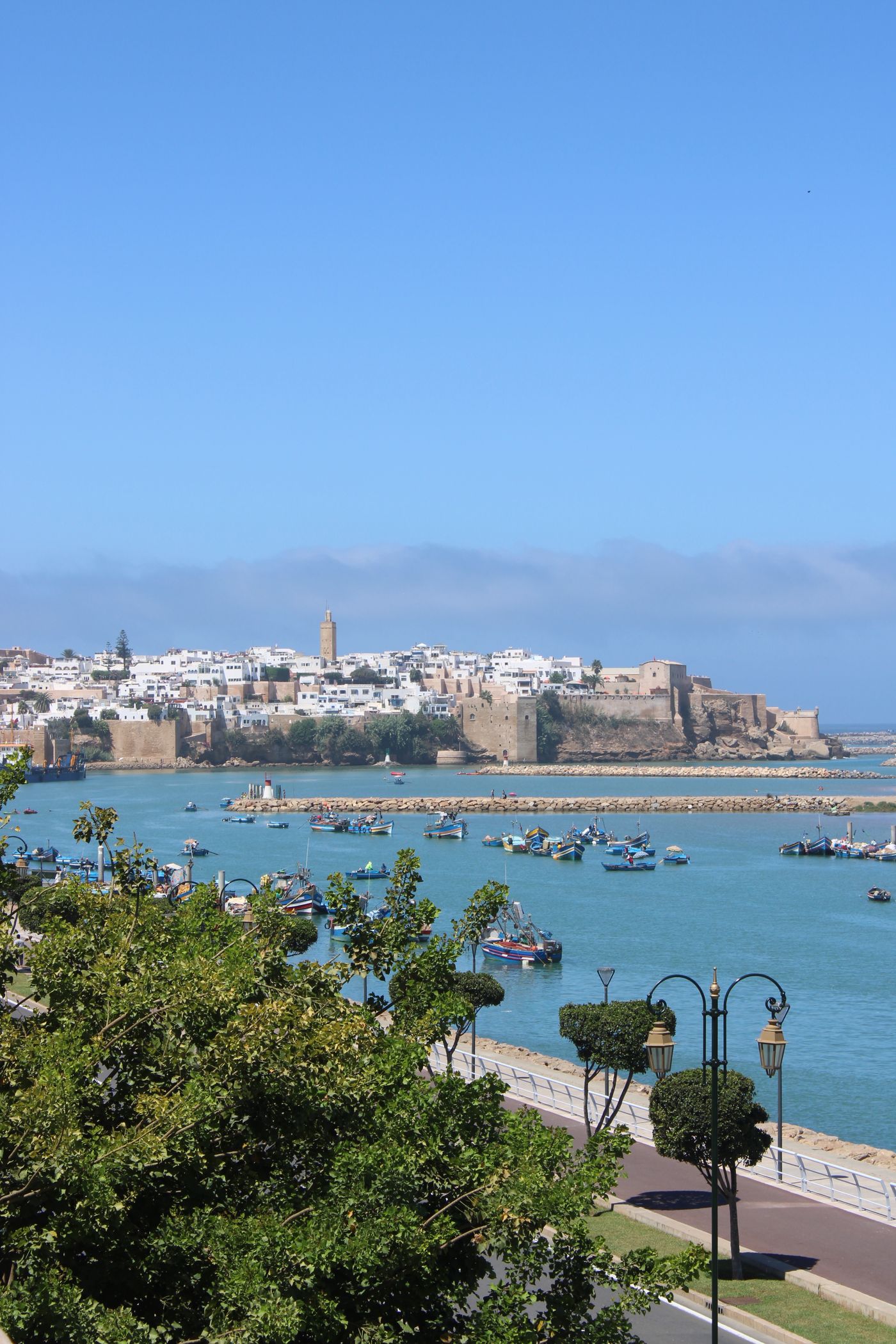
Combine cedar forests with an Ifrane or Middle Atlas journey; add birdwatching around Souss-Massa and the Atlantic coast; look for oasis ecosystems around the Drâa and Ziz valleys; and use High Atlas villages as a base for observing mountain landscapes and seasonal vegetation.
Nature does not need to be a separate safari — it can be woven into trekking, road trips, desert journeys and coastal travel.
At a glance
Reliable sources
This guide is based on information from the Convention on Biological Diversity, UNESCO Man and the Biosphere Programme, UNESCO Intangible Cultural Heritage, GREPOM/BirdLife Morocco and BirdLife International.
Species presence and conservation status can change, so guides should verify local conditions and current restrictions before each trip.