01
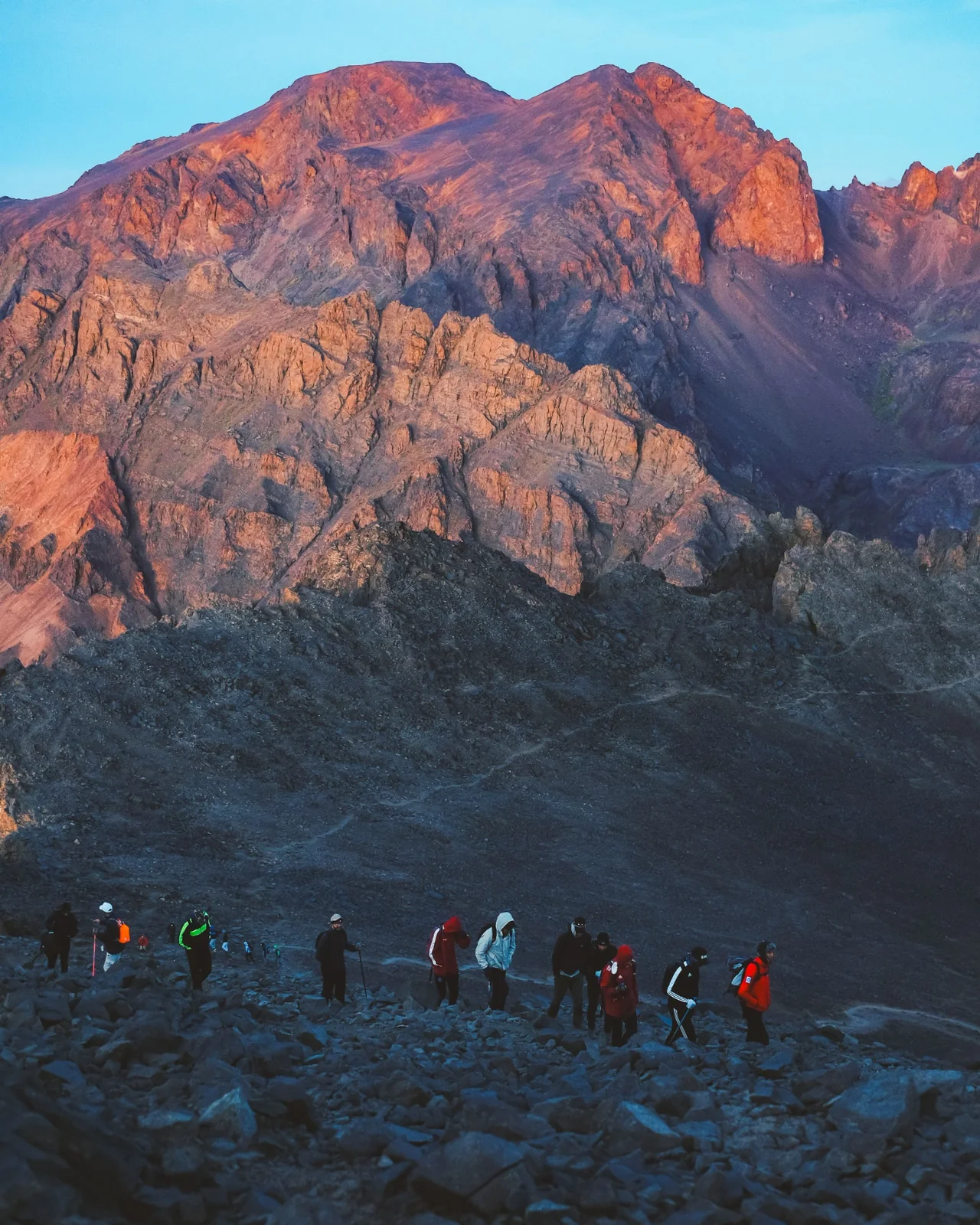
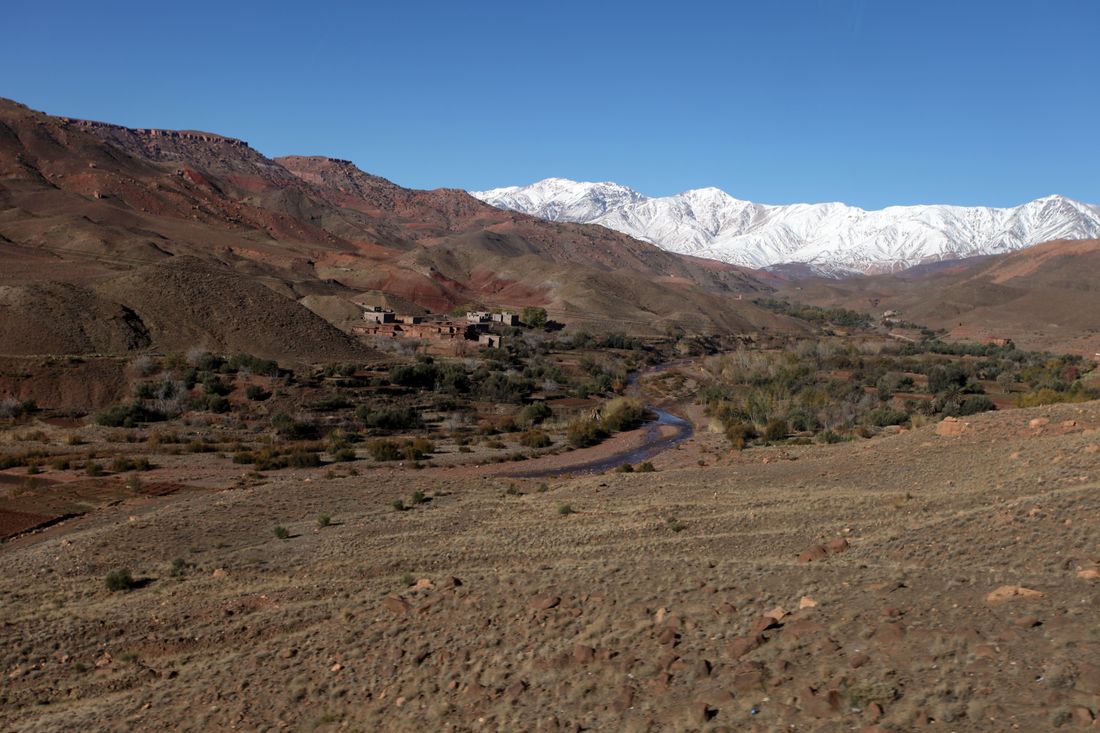
High Atlas Mountains, Morocco
An 8-day traverse of the High Atlas from west to east
This is one of the most ambitious trekking journeys in Morocco.
An eight-day traverse of the High Atlas from the Toubkal region to the Aït Bouguemez valley — the ultimate Atlas trekking experience.
Duration
8 Days
Difficulty
Challenging
Elevation
Up to 4,167 m
Best Season
May–Oct
Start
Marrakech
Private
Yes
Start
Marrakech
End
Marrakech
Distance
Approx. 120 km trekking
Format
Private & customizable
Difficulty profile
A practical seven-step scale built from the route data on this page. It is intended to help you compare journeys, not to replace medical advice or a guide's on-the-ground assessment.
6/7
Challenging
Challenging
8 Days
Up to 4,167 m
Marrakech
Approx. 120 km trekking
May–Oct
Why this rating makes sense
With a difficulty rating of 6, this is an extreme undertaking reserved for experienced, fit trekkers with prior high-altitude hiking experience. Days are long, elevation gains are substantial, and conditions at altitude can be harsh with wind, cold, and exposure. Accommodation is basic and medical help is far away. It is not suitable for beginners, those with altitude sensitivity, or anyone not prepared for consecutive days of sustained physical effort in remote terrain.
The radar is a planning aid derived from the route information already published on this page; it is not a medical or technical grading.
Why This Journey?
This is for serious trekkers who want to cross the High Atlas end to end — a multi-day expedition from Toubkal to M'Goun linking valleys, passes, and summits. One of the great mountain traverses in North Africa.
Journey overview
This is the big one — a traverse of the High Atlas that connects the Toubkal region to the Aït Bouguemez valley, crossing high passes, remote valleys, and Amazigh villages over eight days. It combines elements of the Toubkal summit trek, the Azzaden Valley, and the M'Goun region into a single, continuous journey. This is for serious trekkers who want to see the full breadth of the High Atlas on foot.
It is planned as a 8 days experience with the route beginning in Marrakech and finishing in Marrakech The listed difficulty is challenging with a stated high point or elevation of Up to 4,167 m and an approximate distance of Approx. 120 km trekking. The current itinerary data lists May–Oct as the best season.
The journey is structured around Day 1: Marrakech to Imlil and trek to refuge (Marrakech → Imlil → Neltner Refuge); Day 2: Toubkal summit and descent (Neltner Refuge → Toubkal Summit → Azzaden Valley); Day 3: Azzaden to Ouirgane (Azzaden Valley → Ouirgane); Day 4: Transfer to Aït Bouguemez (Ouirgane → Aït Bouguemez); Day 5: Trek to M'Goun base camp (Aït Bouguemez → M'Goun base camp). Key elements include An 8-day traverse of the High Atlas from west to east; Cross high passes and remote valleys; Summit Toubkal and M'Goun on the same traverse; Experience the full range of Atlas landscapes.
This is for serious trekkers who want to cross the High Atlas end to end — a multi-day expedition from Toubkal to M'Goun linking valleys, passes, and summits. One of the great mountain traverses in North Africa. Expect a demanding multi-day trek covering significant distance and elevation, typically spanning 8 to 14 days depending on the route. The traverse crosses high passes above 3,500 metres, passes through remote valleys like Ait Bougmez, and may summit peaks including Toubkal or M'Goun. Accommodation is in village gites and homestays, with basic sleeping arrangements and shared facilities. Food is simple, prepared by hosts or a cook team. The trek involves long days of walking, significant ascent and descent, and exposure to high-altitude weather. With a difficulty rating of 6, this is an extreme undertaking reserved for experienced, fit trekkers with prior high-altitude hiking experience. Days are long, elevation gains are substantial, and conditions at altitude can be harsh with wind, cold, and exposure. Accommodation is basic and medical help is far away. It is not suitable for beginners, those with altitude sensitivity, or anyone not prepared for consecutive days of sustained physical effort in remote terrain.
For the guest
For guests choosing a Morocco trekking holiday, the value is in the rhythm of walking, the changing landscape and the chance to spend time in places that are easy to pass by on a road trip.
If you are researching high atlas traverse, this page is designed to answer the questions that matter before booking: what the days feel like, who the route suits, what the route includes and what conditions to prepare for.
The practical side matters too: this is a challenging journey over 8 Days, with the best travel window listed as May–Oct. With a difficulty rating of 6, this is an extreme undertaking reserved for experienced, fit trekkers with prior high-altitude hiking experience. Days are long, elevation gains are substantial, and conditions at altitude can be harsh with wind, cold, and exposure. Accommodation is basic and medical help is far away. It is not suitable for beginners, those with altitude sensitivity, or anyone not prepared for consecutive days of sustained physical effort in remote terrain.
About the Region
The High Atlas is Morocco's most dramatic mountain range, running roughly east to west across the center of the country with peaks exceeding 4,000 metres, including Jebel Toubkal at 4,167 metres and M'Goun at 4,071 metres. A grand traverse crosses multiple valleys, high passes, and ridge lines, linking remote Berber villages connected only by footpaths. The landscape ranges from irrigated valley floors with terraced agriculture to barren, scree-covered summits. The range acts as a barrier between the northern plains and the Sahara, creating distinct climates on either side.
Continue planning Morocco
Compare this High Atlas Grand Traverse with the places and practical guides that help travelers understand the route before booking.
Destinations on this route
Morocco travel guides
Journey highlights
A route-specific field guide built from the places, highlights and activities already recorded for this journey.
High Atlas Mountains, Morocco
This is one of the most ambitious trekking journeys in Morocco.
Journey stage
It summits both Toubkal (4,167 m) and M'Goun (4,071 m).

Imlil and the High Atlas, Morocco
8 continuous days of trekking — you need excellent fitness.
Journey stage
Best from May to October.
Journey stage
Weather can change rapidly — be prepared for all conditions.
Journey stage 1
Marrakech to Imlil and trek to refuge
Journey stage 1
Marrakech to Imlil and trek to refuge
Journey stage 1
Marrakech to Imlil and trek to refuge
Journey stage 2
Toubkal summit and descent
Journey stage 2
Toubkal summit and descent
Journey stage 2
Toubkal summit and descent
Journey stage 3
Azzaden to Ouirgane
Good to know
Very experienced trekkers
Good to know
Those who want to traverse the entire High Atlas
What to experience
A visual route guide built around the actual places and experiences named in this itinerary. Each photograph is chosen from the matching location pool, while the note beside it explains why that moment matters to a guest.
High Atlas Mountains, Morocco
This moment is included because it helps explain what the journey is actually like on the ground. An 8-day traverse of the High Atlas from west to east is connected to the route, season and practical details above, giving guests useful context instead of using the photograph as decoration alone.
Imlil and the High Atlas, Morocco
The point here is the effort as much as the view. Summit Toubkal and M'Goun on the same traverse is one of the journey’s defining moments, so guests should expect a slower, more deliberate pace and conditions that reflect the terrain and elevation described in the trip plan.
Gallery
16 photos
Route & Map
Key locations on this journey. Markers show the verified waypoints available for this route; the map does not claim exact trail geometry.
Day-by-Day
This is a suggested itinerary. Every journey is adjustable — pace, activities, and accommodation.
Walking
4–5 hours
Driving
1.5 hours
Elevation
1,740 m → 3,207 m
Meals
Lunch, dinner
Accommodation
Neltner Refuge
Walking
8–9 hours
Elevation
3,207 m → 4,167 m → 2,200 m
Meals
Breakfast, lunch, dinner
Accommodation
Village guesthouse
Walking
5–6 hours
Elevation
2,200 m → 1,200 m
Meals
Breakfast, lunch, dinner
Accommodation
Village guesthouse
Walking
2 hours
Driving
4–5 hours
Elevation
1,200 m → 1,900 m
Meals
Breakfast, lunch, dinner
Accommodation
Village guesthouse
Walking
6 hours
Elevation
1,900 m → 2,900 m
Meals
Breakfast, lunch, dinner
Accommodation
Tented camp
Walking
8–9 hours
Elevation
2,900 m → 4,071 m → 2,900 m
Meals
Breakfast, lunch, dinner
Accommodation
Tented camp
Walking
6–7 hours
Elevation
2,900 m → 1,900 m
Meals
Breakfast, lunch, dinner
Accommodation
Village guesthouse
Driving
5 hours
Elevation
1,900 m → 466 m
Meals
Breakfast
Accommodation
Not included
What You Will Experience
Expect a demanding multi-day trek covering significant distance and elevation, typically spanning 8 to 14 days depending on the route. The traverse crosses high passes above 3,500 metres, passes through remote valleys like Ait Bougmez, and may summit peaks including Toubkal or M'Goun. Accommodation is in village gites and homestays, with basic sleeping arrangements and shared facilities. Food is simple, prepared by hosts or a cook team. The trek involves long days of walking, significant ascent and descent, and exposure to high-altitude weather.
Journey character
Physical Demands
6–9 hours of walking per day on mountain trails
Altitude up to 4,167 m
Summiting both Toubkal and M'Goun
Tented camping and village stays
8 continuous days of trekking
High passes and remote terrain
Best Time to Go
The May to October window is the only viable period for a full traverse, as winter snow blocks the high passes and makes the route impassable. June and September are often considered optimal, with stable weather and less crowding than the July-August peak. Summer afternoons can bring thunderstorms at high elevation, requiring early starts. Snow can persist on north-facing passes into early June, and returns by late October at the highest points.
Is This Right for You?
Very experienced trekkers
Those who want to traverse the entire High Atlas
People with excellent mountain fitness and altitude experience
Travelers who want a genuine wilderness expedition
Those who have not trekked at altitude
Travelers who prefer comfortable accommodation
Anyone with knee or joint problems
Those seeking a short or easy trek
What's Included
Qualified mountain guide throughout
Muleteer and mule for luggage
All accommodation (refuge, guesthouses, camps)
All meals during the trek
Round-trip transport from Marrakech
Flights and travel insurance
Accommodation in Marrakech
Personal trekking gear
Personal non-alcoholic beverages and snacks
Tips
Practical Information
Mountain refuges, village guesthouses, and tented camps. Basic throughout.
Private vehicle for transfers between trailheads.
Hearty Moroccan mountain food throughout. Vegetarian options available.
What to Pack
Sturdy hiking boots (broken in)
Warm layers — fleece and down jacket
Waterproof shell jacket
Sleeping bag (0°C rated)
Headlamp with spare batteries
Trekking poles (essential)
Sun protection
Water bottles (min 2L)
First aid kit
Snacks and energy food
FAQs
It is one of the most ambitious — it combines two major summits and a full traverse of the range. You need excellent fitness and altitude experience.
Yes — we can arrange shorter sections. The Toubkal or M'Goun sections can be done independently.
It is a multi-section journey. Some sections are trekking, others involve vehicle transfers between trailheads. The itinerary is designed to connect the key valleys and passes of the High Atlas.
This is a starting point. We will tailor every detail to your dates, interests, and travel companions.
From
Marrakech
Related Journeys