About this guide
How Difficult Is Toubkal?
Toubkal is the highest peak in North Africa, but it requires no technical climbing in summer. The challenge is fitness, altitude, and terrain — not ropes and ice axes.
At a glance
The Short Answer
In summer (April–October), Toubkal is a strenuous trek but not a technical climb.
No ropes, no ice axes, no climbing experience needed.
You need good fitness, good boots, and a willingness to walk for 8–10 hours on summit day.
In winter, it is a mountaineering route requiring crampons, ice axe, and winter skills.
A detail worth knowing
The Route
The standard route starts in Imlil (1,740 m), climbs to the Neltner Refuge (3,207 m) on day one, acclimatises on day two, and summits on day three.
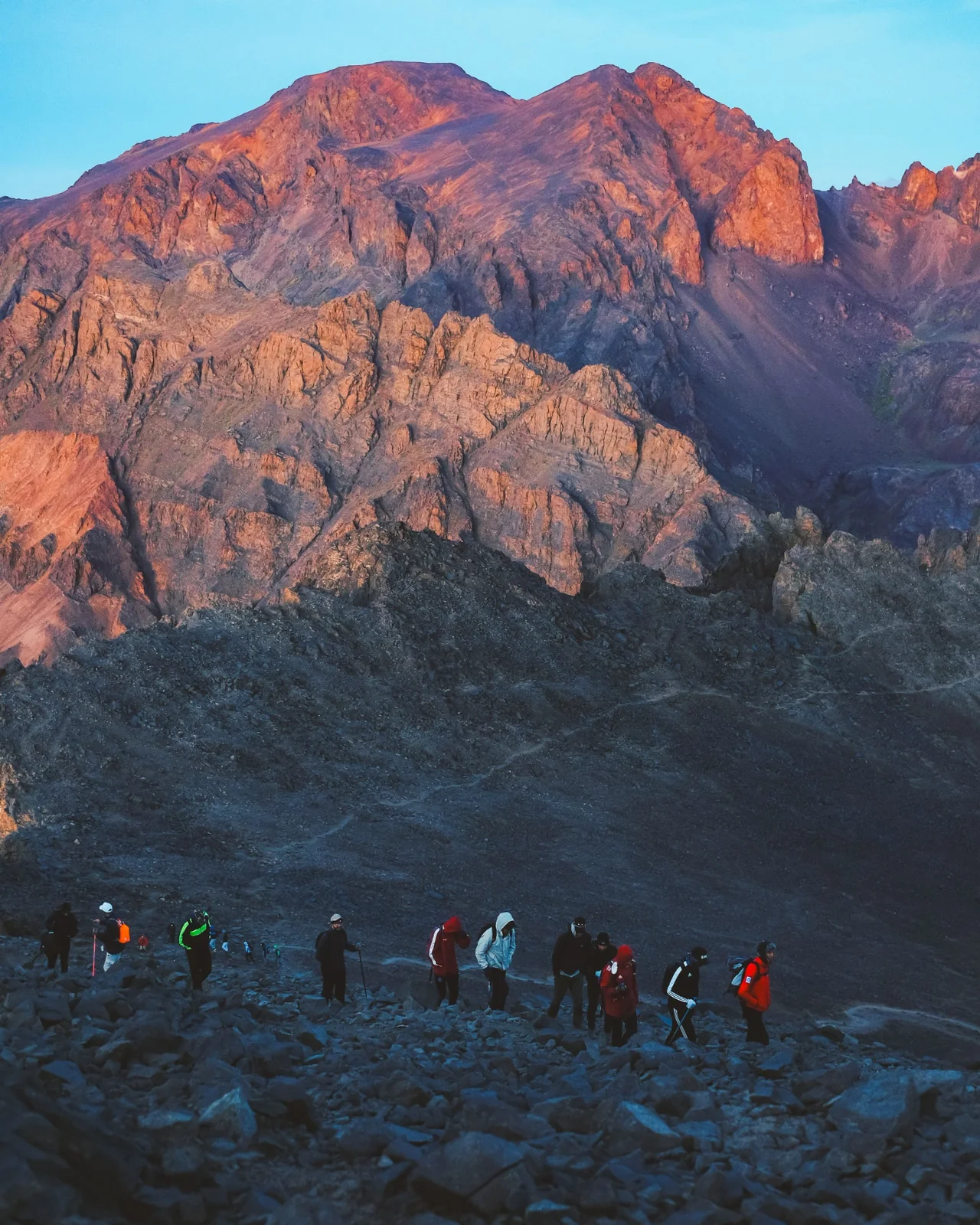
The summit day involves a pre-dawn start and a steep climb on scree to the 4,167 m summit, then a long descent.
The total altitude gain on summit day is about 960 m, but the total descent from the summit to Imlil is nearly 2,500 m.

Local context
Fitness Requirements
You should be able to walk 6–8 hours on hilly terrain with a daypack.
If you do not hike regularly, you should train — walking hills, building leg strength, and improving cardiovascular fitness — for at least 4–6 weeks before the trek.
The descent is harder on the body than the ascent.
Trekking poles are strongly recommended.

How to approach it
Altitude
At 4,167 m, altitude is a real factor.
The acclimatisation day at the refuge is not optional — it is essential.
Symptoms of altitude sickness include headache, nausea, dizziness, and shortness of breath.
If symptoms are severe, you must descend.
Your guide will monitor you.

Timing & conditions
Winter Toubkal
From November to March, Toubkal is a winter mountain.
Snow and ice cover the upper slopes, and the summit requires crampons, ice axe, and a qualified winter guide.
If you do not have winter mountaineering experience, do not attempt it.
We can arrange a winter guide and equipment — just ask.
