01
Journey stage
Trek through the volcanic landscapes of Jebel Saghro
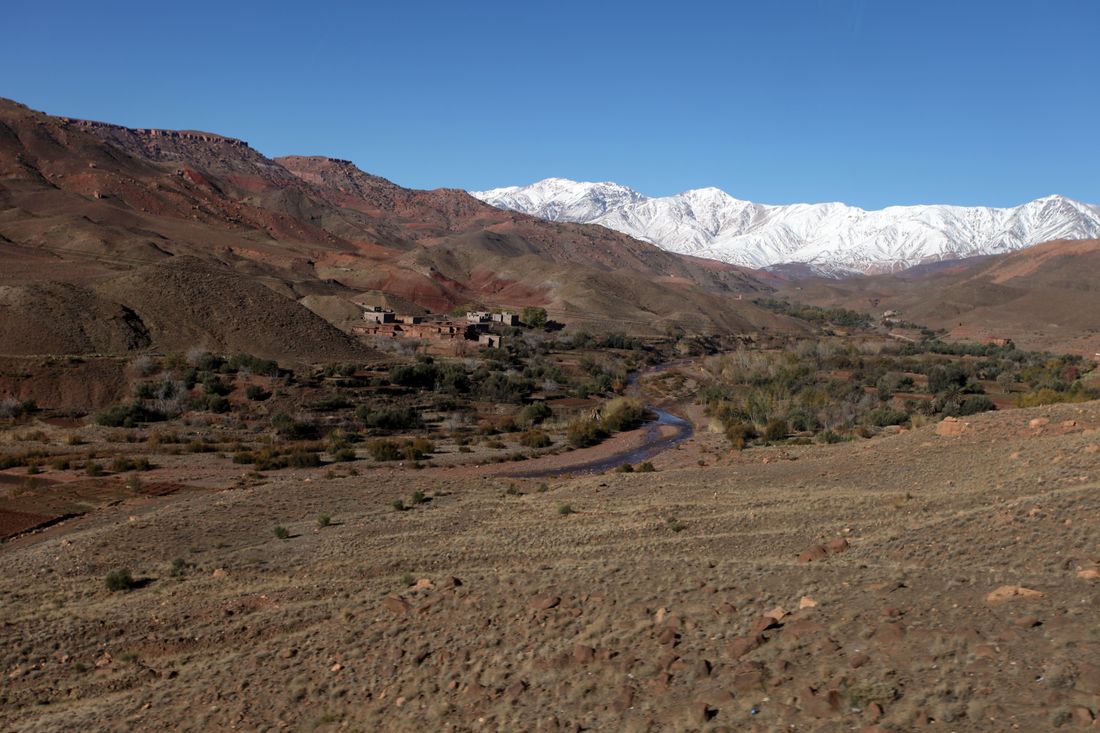
Jebel Saghro is a volcanic massif — very different from the High Atlas.
A five-day trek through Jebel Saghro — the volcanic massif between the High Atlas and the Sahara, with wild plateaus, towers, and nomad camps.
Duration
5 Days
Difficulty
Moderate–Challenging
Elevation
Up to 2,500 m
Best Season
Oct–Apr
Start
Marrakech or Ouarzazate
Private
Yes
Start
Marrakech or Ouarzazate
End
Marrakech or Ouarzazate
Distance
Approx. 70 km trekking
Format
Private & customizable
Difficulty profile
A practical seven-step scale built from the route data on this page. It is intended to help you compare journeys, not to replace medical advice or a guide's on-the-ground assessment.
4/7
Moderate–Challenging
Moderate–Challenging
5 Days
Up to 2,500 m
Marrakech or Ouarzazate
Approx. 70 km trekking
Oct–Apr
Why this rating makes sense
This is a high-difficulty trek suited to experienced walkers who are comfortable with multi-day camping and sustained daily walking at moderate altitude. You should be fit enough for several hours of hiking per day over rocky terrain and prepared for cold nights in tents. It is not suited to beginners or those seeking comfort-based travel. The rewards are solitude, dramatic geology, and nomadic cultural encounters rarely found on busier Atlas routes.
The radar is a planning aid derived from the route information already published on this page; it is not a medical or technical grading.
Why This Journey?
This is for experienced trekkers who want a different mountain range — the Anti-Atlas and Jebel Saghro, a landscape of volcanic peaks and nomad territory. A winter trekking alternative when the High Atlas is snowbound.
Journey overview
Jebel Saghro is a volcanic massif between the High Atlas and the Sahara — a landscape of plateaus, rock towers, and deep gorges, inhabited by nomadic Aït Atta families who move with their flocks. It is warmer and lower than the High Atlas, making it ideal for winter trekking when the High Atlas is snowbound. The trekking is real — long days, remote terrain — but the altitude stays below 2,800 m.
It is planned as a 5 days experience with the route beginning in Marrakech or Ouarzazate and finishing in Marrakech or Ouarzazate The listed difficulty is moderate–challenging with a stated high point or elevation of Up to 2,500 m and an approximate distance of Approx. 70 km trekking. The current itinerary data lists Oct–Apr as the best season.
The journey is structured around Day 1: Marrakech or Ouarzazate to Saghro (Marrakech → Ouarzazate → Saghro trailhead); Day 2: Trek through Saghro (Saghro plateau); Day 3: High pass crossing (Saghro — high pass); Day 4: Trek to final village (Saghro — final village); Day 5: Return to Marrakech or Ouarzazate (Saghro → Ouarzazate → Marrakech). Key elements include Trek through the volcanic landscapes of Jebel Saghro; Dramatic rock formations and plateaus; Visit nomad families and remote villages; Cross high passes and deep gorges.
This is for experienced trekkers who want a different mountain range — the Anti-Atlas and Jebel Saghro, a landscape of volcanic peaks and nomad territory. A winter trekking alternative when the High Atlas is snowbound. You will trek for several days through volcanic plateaus, past towering rock spires such as Bab n'Ali, and across high passes with wide views toward the Sahara. The trek is supported by mules and a local guide, with nights spent camping in tents or staying in basic village houses. Encounters with Ait Atta nomads and their flocks are common in the cooler months. Food is simple, prepared by the cook team, typically bread, tagines, and tea. The walking is sustained but on generally good trails, with some rocky scrambling on passes. This is a high-difficulty trek suited to experienced walkers who are comfortable with multi-day camping and sustained daily walking at moderate altitude. You should be fit enough for several hours of hiking per day over rocky terrain and prepared for cold nights in tents. It is not suited to beginners or those seeking comfort-based travel. The rewards are solitude, dramatic geology, and nomadic cultural encounters rarely found on busier Atlas routes.
For the guest
For guests choosing a Morocco trekking holiday, the value is in the rhythm of walking, the changing landscape and the chance to spend time in places that are easy to pass by on a road trip.
If you are researching jebel saghro, this page is designed to answer the questions that matter before booking: what the days feel like, who the route suits, what the route includes and what conditions to prepare for.
The practical side matters too: this is a moderate–challenging journey over 5 Days, with the best travel window listed as Oct–Apr. This is a high-difficulty trek suited to experienced walkers who are comfortable with multi-day camping and sustained daily walking at moderate altitude. You should be fit enough for several hours of hiking per day over rocky terrain and prepared for cold nights in tents. It is not suited to beginners or those seeking comfort-based travel. The rewards are solitude, dramatic geology, and nomadic cultural encounters rarely found on busier Atlas routes.
About the Region
Jbel Saghro is a volcanic massif lying between the High Atlas and the Sahara in southern Morocco, forming part of the Anti-Atlas chain. The landscape is arid and dramatic, with jagged peaks, deep plateaus, and eroded rock formations unlike the greener High Atlas. Elevations are lower than the High Atlas, generally staying below 2,800 meters, which means the range escapes the heavy snowfall that closes higher treks in winter. The climate is dry with hot summers and cold nights in winter. The area is the homeland of the Ait Atta, a nomadic Amazigh tribe that migrates through the massif seasonally.
Continue planning Morocco
Compare this Jebel Saghro trek with the places and practical guides that help travelers understand the route before booking.
Destinations on this route
Morocco travel guides
Journey highlights
A route-specific field guide built from the places, highlights and activities already recorded for this journey.
Journey stage
Jebel Saghro is a volcanic massif — very different from the High Atlas.
Journey stage
It is lower than the High Atlas, making it a good winter trekking destination.
Journey stage
The landscape is dramatic — rock formations, plateaus, and gorges.
Journey stage
Best from October to April.
Journey stage
This is for experienced trekkers who want a different mountain range — the Anti-Atlas and Jebel Saghro, a landscape of volcanic peaks and nomad territory. A winter trekking alternative when the High Atlas is snowbound.
Journey stage 1
Marrakech or Ouarzazate to Saghro
Journey stage 1
Marrakech or Ouarzazate to Saghro
Journey stage 1
Marrakech or Ouarzazate to Saghro
Journey stage 2
Trek through Saghro
Journey stage 2
Trek through Saghro
Journey stage 2
Trek through Saghro
Journey stage 3
High pass crossing
Good to know
Trekkers who want a winter alternative to the High Atlas
Good to know
Those interested in volcanic landscapes
Gallery
5 photos
Route & Map
Key locations on this journey. Markers show the verified waypoints available for this route; the map does not claim exact trail geometry.
Day-by-Day
This is a suggested itinerary. Every journey is adjustable — pace, activities, and accommodation.
Walking
3 hours
Driving
5–6 hours
Elevation
1,800 m
Meals
Lunch, dinner
Accommodation
Tented camp
Walking
6 hours
Elevation
1,800 m → 2,200 m
Meals
Breakfast, lunch, dinner
Accommodation
Tented camp
Walking
7 hours
Elevation
2,200 m → 2,500 m → 2,000 m
Meals
Breakfast, lunch, dinner
Accommodation
Tented camp
Walking
5–6 hours
Elevation
2,000 m → 1,800 m
Meals
Breakfast, lunch, dinner
Accommodation
Village stay or camp
Driving
5–6 hours
Meals
Breakfast
Accommodation
Not included
What You Will Experience
You will trek for several days through volcanic plateaus, past towering rock spires such as Bab n'Ali, and across high passes with wide views toward the Sahara. The trek is supported by mules and a local guide, with nights spent camping in tents or staying in basic village houses. Encounters with Ait Atta nomads and their flocks are common in the cooler months. Food is simple, prepared by the cook team, typically bread, tagines, and tea. The walking is sustained but on generally good trails, with some rocky scrambling on passes.
Journey character
Physical Demands
5–7 hours of walking per day on mountain trails
Moderate altitude (up to 2,500 m)
Uneven volcanic terrain
Tented camping with basic facilities
Remote location
Best Time to Go
The trek runs from October to April, as Saghro is specifically a winter destination when the High Atlas is snowbound. October, November, March, and April offer the best balance of mild days and cool but tolerable nights. December through February brings the coldest nights, with frost likely at altitude, though days are often clear and pleasant. Summer is far too hot and is not part of the operating season.
Is This Right for You?
Trekkers who want a winter alternative to the High Atlas
Those interested in volcanic landscapes
People who want to meet nomad families
Travelers who enjoy remote, uncrowded trails
Those who prefer comfortable accommodation
Travelers who want high altitude (Saghro is lower than the High Atlas)
Those seeking easy walks
What's Included
Qualified mountain guide
Muleteer and mule for luggage
Tented camp accommodation
All meals during the trek
Round-trip transport
Flights and travel insurance
Accommodation before and after
Personal trekking gear
Personal non-alcoholic beverages
Tips
Practical Information
Tented camps and a village stay. Basic but authentic.
Private vehicle to the trailhead and return.
Simple Moroccan mountain cooking — tagine, couscous, soup, bread, tea.
What to Pack
Sturdy hiking boots
Warm layers for evenings
Sleeping bag
Waterproof jacket
Sun protection
Headlamp
Water bottles
First aid kit
Trekking poles
FAQs
Yes — Saghro is lower than the High Atlas and does not get snow, making it ideal for winter trekking (October to April).
It is a volcanic massif between the High Atlas and the Sahara, with jagged peaks, plateaus, and nomadic Amazigh families still moving with their flocks.
No — Saghro is at a lower altitude and has a desert climate. Days are warm but nights can be cold, especially from November to February.
This is a starting point. We will tailor every detail to your dates, interests, and travel companions.
From
Marrakech or Ouarzazate
Related Journeys