
01
Merzouga and Erg Chebbi, Morocco
Live with nomad families in the Sahara
This is a genuine cultural experience — not a staged tourist activity.
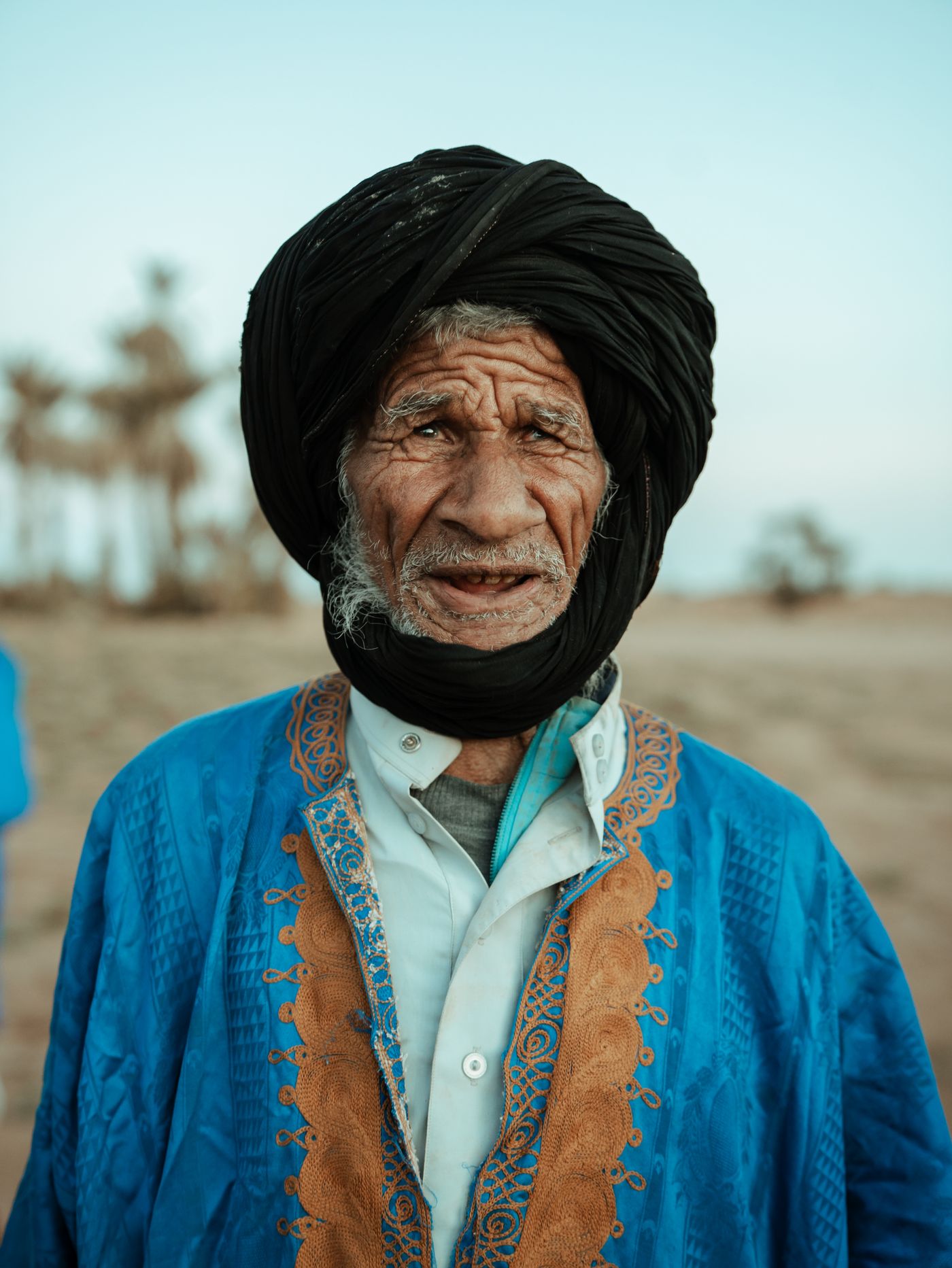
A four-day journey to live with nomadic families in the Sahara — share their daily life, walk with their flocks, and sleep under the stars.
Duration
4 Days
Difficulty
Moderate
Elevation
Up to 1,000 m
Best Season
Oct–Apr
Start
Marrakech or Ouarzazate
Private
Yes
Start
Marrakech or Ouarzazate
End
Marrakech or Ouarzazate
Distance
Approx. 20 km walking
Format
Private & customizable
Difficulty profile
A practical seven-step scale built from the route data on this page. It is intended to help you compare journeys, not to replace medical advice or a guide's on-the-ground assessment.
3/7
Moderate
Moderate
4 Days
Up to 1,000 m
Marrakech or Ouarzazate
Approx. 20 km walking
Oct–Apr
Why this rating makes sense
With a difficulty rating of 3, this journey requires a moderate level of resilience rather than athletic fitness. The physical demands are limited to camel riding and walking on sand, but the conditions are basic: sleeping in tents, limited water for washing, and exposure to desert weather. It suits culturally curious travelers who are comfortable with rustic conditions and open to unfamiliar social situations. It is not suitable for those who need comfortable beds, reliable hot water, or who are sensitive to dust and temperature extremes.
The radar is a planning aid derived from the route information already published on this page; it is not a medical or technical grading.
Why This Journey?
This is for travelers who want to go beyond trekking — a journey with nomad families in the Atlas, sharing their daily life, their food, and their seasonal movement. Not a trek, not a tour. A lived experience.
Journey overview
This is not a desert tour — it is a nomad experience. You travel to the Sahara and spend time with a nomadic family, sharing their daily life: making tea, baking bread in the sand, walking with the flocks, and sleeping in their camp. It is a rare opportunity to see a way of life that is disappearing. The nomads of the Sahara are some of the last truly nomadic people in Morocco, and this journey is conducted with respect for their privacy and dignity.
It is planned as a 4 days experience with the route beginning in Marrakech or Ouarzazate and finishing in Marrakech or Ouarzazate The listed difficulty is moderate with a stated high point or elevation of Up to 1,000 m and an approximate distance of Approx. 20 km walking. The current itinerary data lists Oct–Apr as the best season.
The journey is structured around Day 1: Marrakech or Ouarzazate to the desert (Marrakech → Ouarzazate → desert camp); Day 2: Walking with the nomads (Desert region); Day 3: Desert life and traditions (Desert region); Day 4: Return (Desert → Ouarzazate → Marrakech). Key elements include Live with nomad families in the Sahara; Learn about nomadic life and traditions; Walk with nomads through the desert; Share meals and stories around the fire.
This is for travelers who want to go beyond trekking — a journey with nomad families in the Atlas, sharing their daily life, their food, and their seasonal movement. Not a trek, not a tour. A lived experience. Expect an immersive experience focused on nomadic life, including time with nomad families in their tents, sharing tea and meals, and learning about their daily routines of herding, water gathering, and bread-making. The journey typically includes camel trekking through the dunes and overnight camping in the desert, either in nomad-style tents or at a desert camp. Activities may include learning to bake bread in sand, navigating by stars, and understanding desert survival techniques. Accommodation ranges from basic nomad tents to semi-permanent desert camps with varying levels of comfort. With a difficulty rating of 3, this journey requires a moderate level of resilience rather than athletic fitness. The physical demands are limited to camel riding and walking on sand, but the conditions are basic: sleeping in tents, limited water for washing, and exposure to desert weather. It suits culturally curious travelers who are comfortable with rustic conditions and open to unfamiliar social situations. It is not suitable for those who need comfortable beds, reliable hot water, or who are sensitive to dust and temperature extremes.
For the guest
For guests who want several sides of Morocco in one private journey, the strength is the contrast between landscapes, cultures and travel rhythms rather than simply counting how many places are visited.
If you are researching nomad experience morocco, this page is designed to answer the questions that matter before booking: what the days feel like, who the route suits, what the route includes and what conditions to prepare for.
The practical side matters too: this is a moderate journey over 4 Days, with the best travel window listed as Oct–Apr. With a difficulty rating of 3, this journey requires a moderate level of resilience rather than athletic fitness. The physical demands are limited to camel riding and walking on sand, but the conditions are basic: sleeping in tents, limited water for washing, and exposure to desert weather. It suits culturally curious travelers who are comfortable with rustic conditions and open to unfamiliar social situations. It is not suitable for those who need comfortable beds, reliable hot water, or who are sensitive to dust and temperature extremes.
About the Region
The Sahara around Erg Chebbi near Merzouga is a landscape of large dune fields rising to 150 metres, surrounded by stony desert plateau called hamada. The region is on the eastern edge of Morocco near the Algerian border, where the Sahara begins in earnest. Nomadic Berber families still move through this area with camel herds, maintaining a transhumant way of life that has persisted for centuries, though their numbers have steadily declined. The climate is hyper-arid with extreme heat in summer and cold nights in winter. Oases and wells dot the landscape, supporting small settlements and nomadic camps.
Continue planning Morocco
Compare this Morocco nomad experience with the places and practical guides that help travelers understand the route before booking.
Destinations on this route
Journey highlights
A route-specific field guide built from the places, highlights and activities already recorded for this journey.
Merzouga and Erg Chebbi, Morocco
This is a genuine cultural experience — not a staged tourist activity.
Journey stage
The nomad families move with the seasons — the exact location varies.
Journey stage
Conditions are basic — no electricity, no running water.
Journey stage
Best from October to April.
Journey stage
This is for travelers who want to go beyond trekking — a journey with nomad families in the Atlas, sharing their daily life, their food, and their seasonal movement. Not a trek, not a tour. A lived experience.
Journey stage 1
Depart 08:00
Journey stage 1
Depart 08:00
Journey stage 1
Depart 08:00
Journey stage 1
Depart 08:00
Journey stage 2
Walking with the nomads
Journey stage 2
Walking with the nomads
Journey stage 2
Walking with the nomads
Good to know
Travelers who want a genuine cultural immersion
Good to know
Those interested in nomadic life
What to experience
A visual route guide built around the actual places and experiences named in this itinerary. Each photograph is chosen from the matching location pool, while the note beside it explains why that moment matters to a guest.
Merzouga and Erg Chebbi, Morocco
The attraction is the human landscape as much as the scenery. Live with nomad families in the Sahara brings the journey closer to everyday Moroccan life, while keeping the experience grounded in the villages and communities actually named in the itinerary.
Gallery
16 photos
Route & Map
Key locations on this journey. Markers show the verified waypoints available for this route; the map does not claim exact trail geometry.
Day-by-Day
This is a suggested itinerary. Every journey is adjustable — pace, activities, and accommodation.
Driving
6–7 hours
Timing
Depart 08:00
Meals
Lunch, dinner
Accommodation
Nomad tent
Walking
4–5 hours
Meals
Breakfast, lunch, dinner
Accommodation
Nomad tent
Walking
3–4 hours
Meals
Breakfast, lunch, dinner
Accommodation
Nomad tent
Driving
6–7 hours
Meals
Breakfast
Accommodation
Not included
What You Will Experience
Expect an immersive experience focused on nomadic life, including time with nomad families in their tents, sharing tea and meals, and learning about their daily routines of herding, water gathering, and bread-making. The journey typically includes camel trekking through the dunes and overnight camping in the desert, either in nomad-style tents or at a desert camp. Activities may include learning to bake bread in sand, navigating by stars, and understanding desert survival techniques. Accommodation ranges from basic nomad tents to semi-permanent desert camps with varying levels of comfort.
Journey character
Physical Demands
3–5 hours of walking per day on sand and desert terrain
Heat during the day, cold at night
Basic accommodation in nomad tents
Very remote locations
No electricity or running water
Best Time to Go
The October to April window avoids the dangerous summer heat of the Sahara, when temperatures can be life-threatening. Within this range, November to February offers the coolest conditions but very cold nights in the open desert. March and April provide a balance of warm days and tolerable nights, with the landscape sometimes showing brief desert flora after winter rains. Sand storms are a risk in the transitional seasons, particularly spring.
Is This Right for You?
Travelers who want a genuine cultural immersion
Those interested in nomadic life
People comfortable with basic conditions
Anyone who wants to understand desert life
Those who need comfortable accommodation
Travelers who dislike heat and sand
Those who want luxury experiences
Anyone with limited mobility
What's Included
Transport to and from the desert
All meals
Accommodation in nomad tents
Local guide/translator
Guide familiar with nomadic routes
Pack animals for equipment
Full-board meals during the journey
Personal non-alcoholic beverages
Travel insurance
Tips
Personal gear
Sleeping bag
Practical Information
Nomad tents — basic, no electricity or running water. Bring a sleeping bag.
Private vehicle to the desert region and return.
Simple nomad cooking — bread, tagine, tea. Meals shared with the nomad family.
What to Pack
Warm sleeping bag
Warm jacket for desert nights
Sun protection
Scarf for sand
Closed shoes
Wet wipes
Headlamp
Power bank
Water bottle
FAQs
Yes — you will live with a nomad family in the desert. This is not a staged tourist camp. The experience is genuine and the conditions are real.
You travel with a local guide into the desert around the Draa or Dades valleys, walking with pack animals and spending nights under the stars. You learn how nomadic Amazigh families move with their flocks and manage water and food in arid terrain.
Children 10 and older who are comfortable walking 4–5 hours per day and sleeping in a tent can participate. Let us know and we can adjust the pace.
This is a starting point. We will tailor every detail to your dates, interests, and travel companions.
From
Marrakech or Ouarzazate
Related Journeys


