01
Merzouga and Erg Chebbi, Morocco
Stargaze in the Sahara — one of the darkest skies on Earth
The Sahara has some of the darkest skies in the world — ideal for stargazing.
A two-night journey to the Sahara for stargazing — the darkest skies in Morocco, far from any light pollution, with an astronomy guide.
Duration
3 Days
Difficulty
Easy–Moderate
Elevation
Up to 1,000 m
Best Season
Oct–Apr (new moon best)
Start
Marrakech or Ouarzazate
Private
Yes
Start
Marrakech or Ouarzazate
End
Marrakech or Ouarzazate
Distance
Approx. 10 km walking
Format
Private & customizable
Difficulty profile
A practical seven-step scale built from the route data on this page. It is intended to help you compare journeys, not to replace medical advice or a guide's on-the-ground assessment.
2/7
Easy–Moderate
Easy–Moderate
3 Days
Up to 1,000 m
Marrakech or Ouarzazate
Approx. 10 km walking
Oct–Apr (new moon best)
Why this rating makes sense
Rated difficulty 2, this journey is accessible to most travelers who can tolerate a desert camp overnight and a short walk on sand. No special fitness is required, but comfort with basic facilities, cold nights, and standing outdoors for extended periods in the dark is necessary. It suits astronomy enthusiasts, photographers, and anyone seeking a quiet, contemplative desert experience. It is not suitable for those who cannot manage uneven sandy terrain at night or who need consistent warmth and comfort for sleeping.
The radar is a planning aid derived from the route information already published on this page; it is not a medical or technical grading.
Why This Journey?
This is for travelers who want the Sahara at its most silent — a desert camp far from any light, where the night sky is the experience. A journey timed around the new moon for the darkest skies.
Journey overview
The Sahara has the darkest skies in Morocco — far from any city, with zero light pollution, the Milky Way is visible as a bright band across the sky. This journey takes you deep into the desert for two nights of stargazing with an astronomy guide who knows the constellations, the planets, and the stories that the nomads tell about the stars. A telescope is provided for deep-sky observation.
It is planned as a 3 days experience with the route beginning in Marrakech or Ouarzazate and finishing in Marrakech or Ouarzazate The listed difficulty is easy–moderate with a stated high point or elevation of Up to 1,000 m and an approximate distance of Approx. 10 km walking. The current itinerary data lists Oct–Apr (new moon best) as the best season.
The journey is structured around Day 1: Marrakech or Ouarzazate to the desert (Marrakech → Ouarzazate → desert camp); Day 2: Stargazing and desert exploration (Desert camp area); Day 3: Sunrise and return (Desert camp → Ouarzazate → Marrakech). Key elements include Stargaze in the Sahara — one of the darkest skies on Earth; Learn about the night sky from a local guide; Overnight in a desert camp far from light pollution; Camel trek to the camp at sunset.
This is for travelers who want the Sahara at its most silent — a desert camp far from any light, where the night sky is the experience. A journey timed around the new moon for the darkest skies. Expect a journey timed around the new moon, with nights spent at a desert camp in or near the dunes of Erg Chebbi. The experience centers on naked-eye and telescope observation of the night sky, with the Milky Way visible as a bright band and deep-sky objects like the Triangulum Galaxy potentially visible without optics. Evenings typically include guided stargazing with an astronomer or local guide, storytelling, and time for astrophotography. Days may include dune walks, visits to nearby oases, and rest. Accommodation is at a desert camp with tented rooms and basic facilities. Rated difficulty 2, this journey is accessible to most travelers who can tolerate a desert camp overnight and a short walk on sand. No special fitness is required, but comfort with basic facilities, cold nights, and standing outdoors for extended periods in the dark is necessary. It suits astronomy enthusiasts, photographers, and anyone seeking a quiet, contemplative desert experience. It is not suitable for those who cannot manage uneven sandy terrain at night or who need consistent warmth and comfort for sleeping.
For the guest
For guests looking for a Morocco desert experience, the strongest part is the change of pace: long open landscapes, slower evenings and a route shaped by the desert rather than by a checklist of sights.
If you are researching sahara stargazing, this page is designed to answer the questions that matter before booking: what the days feel like, who the route suits, what the route includes and what conditions to prepare for.
The practical side matters too: this is a easy–moderate journey over 3 Days, with the best travel window listed as Oct–Apr (new moon best). Rated difficulty 2, this journey is accessible to most travelers who can tolerate a desert camp overnight and a short walk on sand. No special fitness is required, but comfort with basic facilities, cold nights, and standing outdoors for extended periods in the dark is necessary. It suits astronomy enthusiasts, photographers, and anyone seeking a quiet, contemplative desert experience. It is not suitable for those who cannot manage uneven sandy terrain at night or who need consistent warmth and comfort for sleeping.
About the Region
Erg Chebbi near Merzouga is one of the darkest sky locations in Morocco, rated Bortle Class 1 to 2 on the dark sky scale, meaning minimal to no light pollution. The dunes rise to roughly 150 metres in a compact field about 28 kilometres long and 5 to 7 kilometres wide, on the eastern edge of Morocco near the Algerian border. The surrounding terrain is stony hamada desert with scattered oases. The hyper-arid climate means very low humidity and minimal cloud cover, creating exceptional conditions for astronomical observation. The nearest significant light sources are small towns many kilometres away.
Continue planning Morocco
Compare this Sahara stargazing Morocco with the places and practical guides that help travelers understand the route before booking.
Destinations on this route
Journey highlights
A route-specific field guide built from the places, highlights and activities already recorded for this journey.
Merzouga and Erg Chebbi, Morocco
The Sahara has some of the darkest skies in the world — ideal for stargazing.
Journey stage
Best during the new moon — the sky is darkest.
Journey stage
The Milky Way is visible with the naked eye in the desert.
Merzouga and Erg Chebbi, Morocco
Best from October to April.

Merzouga and Erg Chebbi, Morocco
Bring a headlamp with a red light mode to preserve night vision.
Journey stage 1
Depart 08:00, camel trek at 16:00
Journey stage 1
Depart 08:00, camel trek at 16:00
Journey stage 1
Depart 08:00, camel trek at 16:00
Journey stage 1
Depart 08:00, camel trek at 16:00
Journey stage 1
Depart 08:00, camel trek at 16:00
Journey stage 2
Stargazing and desert exploration
Journey stage 2
Stargazing and desert exploration
Good to know
Astronomy enthusiasts
Good to know
Travelers who want to see the Milky Way in full
What to experience
A visual route guide built around the actual places and experiences named in this itinerary. Each photograph is chosen from the matching location pool, while the note beside it explains why that moment matters to a guest.
Merzouga and Erg Chebbi, Morocco
This moment is included because it helps explain what the journey is actually like on the ground. Stargaze in the Sahara — one of the darkest skies on Earth is connected to the route, season and practical details above, giving guests useful context instead of using the photograph as decoration alone.
Merzouga and Erg Chebbi, Morocco
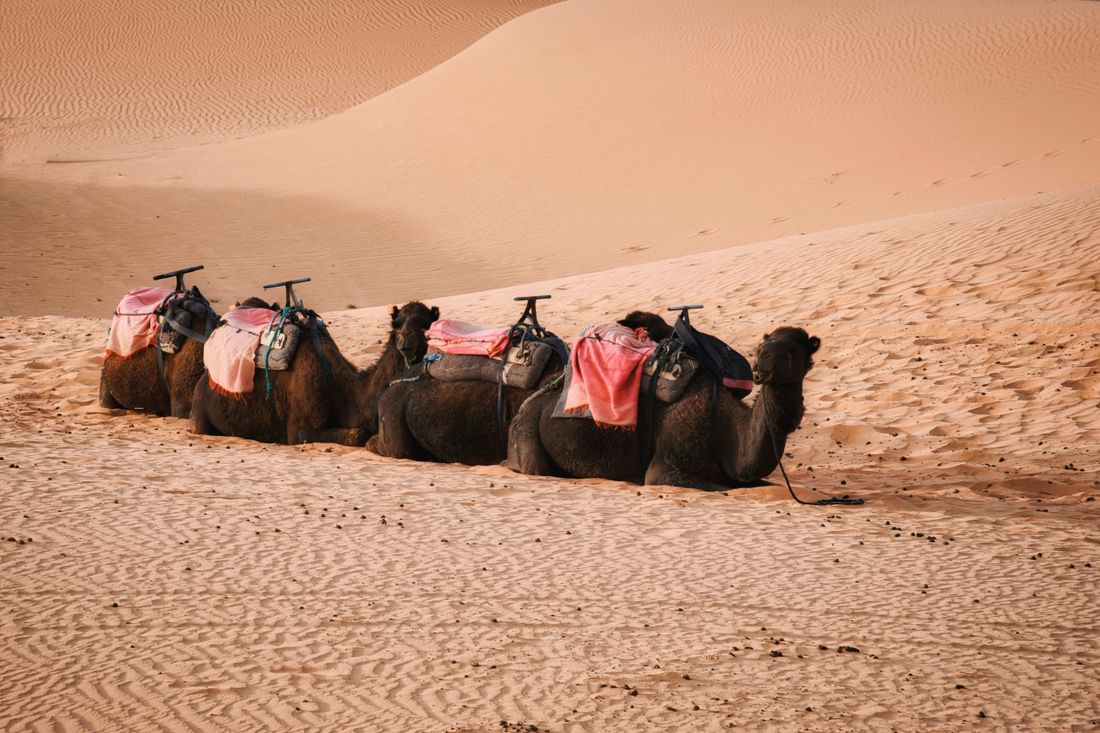
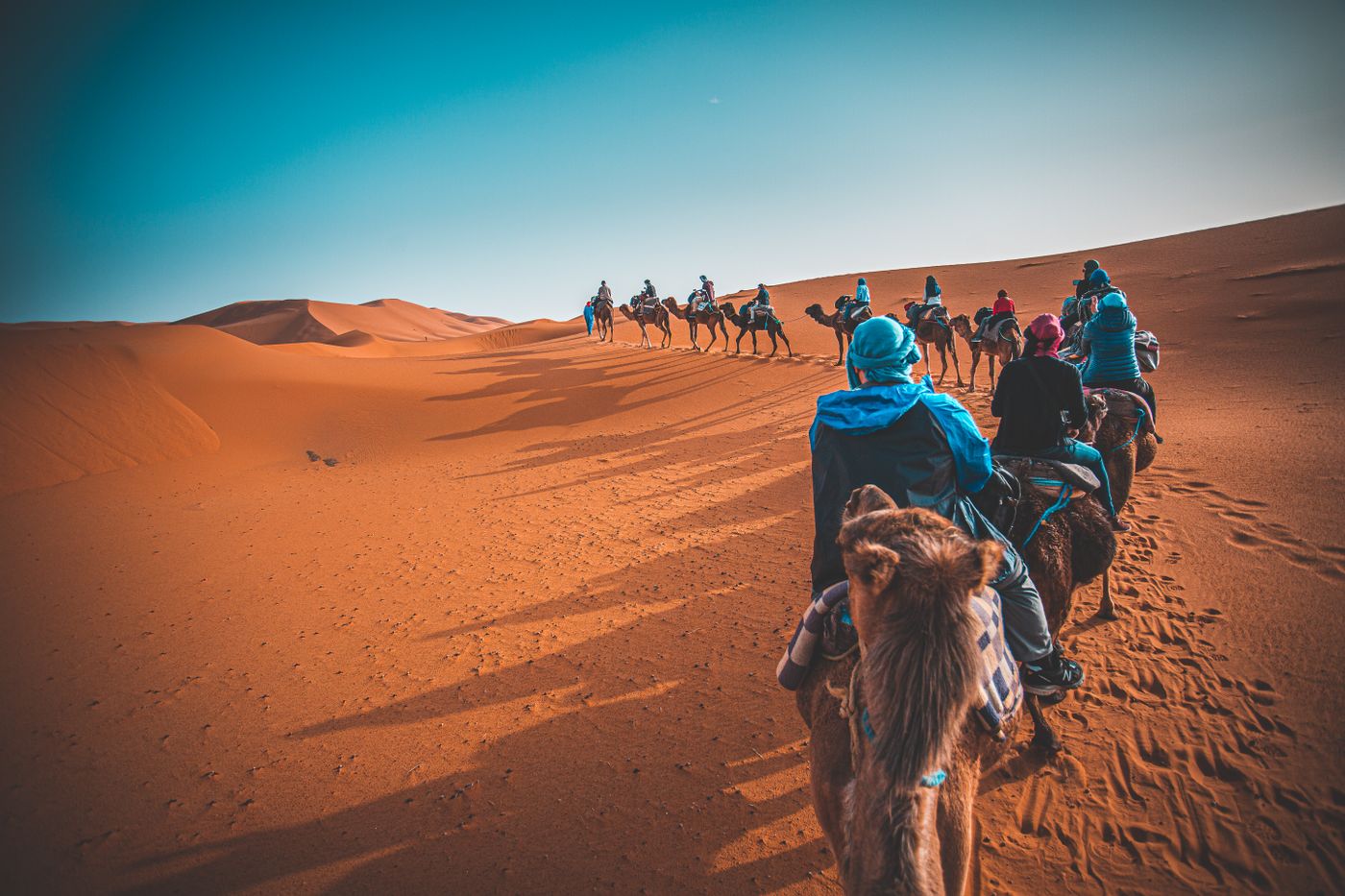
This is where the Sahara becomes an experience rather than a backdrop. Camel trek to the camp at sunset gives guests time to notice the scale of the dunes, the light and the quieter rhythm of the desert, with the exact camp and route details set out in the itinerary.
Merzouga and Erg Chebbi, Morocco
This is where the Sahara becomes an experience rather than a backdrop. Sunrise over the desert gives guests time to notice the scale of the dunes, the light and the quieter rhythm of the desert, with the exact camp and route details set out in the itinerary.
Gallery
16 photos
Route & Map
Key locations on this journey. Markers show the verified waypoints available for this route; the map does not claim exact trail geometry.
Day-by-Day
This is a suggested itinerary. Every journey is adjustable — pace, activities, and accommodation.
Walking
1 hour camel trek
Driving
6–7 hours
Timing
Depart 08:00, camel trek at 16:00
Meals
Lunch, dinner
Accommodation
Desert camp
Walking
3–4 hours
Meals
Breakfast, lunch, dinner
Accommodation
Desert camp
Walking
1 hour camel trek
Driving
6–7 hours
Meals
Breakfast
Accommodation
Not included
What You Will Experience
Expect a journey timed around the new moon, with nights spent at a desert camp in or near the dunes of Erg Chebbi. The experience centers on naked-eye and telescope observation of the night sky, with the Milky Way visible as a bright band and deep-sky objects like the Triangulum Galaxy potentially visible without optics. Evenings typically include guided stargazing with an astronomer or local guide, storytelling, and time for astrophotography. Days may include dune walks, visits to nearby oases, and rest. Accommodation is at a desert camp with tented rooms and basic facilities.
Journey character
Physical Demands
1–3 hours of walking per day
1-hour camel treks
Long driving days
Heat during the day, cold at night
Basic camp facilities
Best Time to Go
The October to April window provides the most reliable clear-sky conditions and avoids summer's extreme heat, but the critical factor is timing around the new moon for maximum darkness. Within this range, the Milky Way core is most prominent from roughly April through September, so late in the window offers the best combination of galactic visibility and comfortable temperatures. Winter months provide long nights and crisp air but are very cold after sunset. Sand storms and occasional cloud cover can disrupt viewing at any time.
Is This Right for You?
Astronomy enthusiasts
Travelers who want to see the Milky Way in full
Those who enjoy desert experiences
Anyone who wants a peaceful desert journey
Those who need comfortable accommodation
Travelers who dislike long drives
Those who want active trekking
Anyone uncomfortable with basic conditions
What's Included
Private transport with driver
Camel trek
2 nights desert camp accommodation
All meals
Stargazing guide
Personal non-alcoholic beverages
Travel insurance
Tips
Personal gear
Sleeping bag liner
Practical Information
Desert camp — private tent with mattress and bedding. Shared toilets. Limited electricity.
Private vehicle to the desert and return. Camel trek to the camp.
All meals included. Simple desert cooking — tagine, couscous, soup, bread, tea.
What to Pack
Warm jacket for desert nights
Sun protection
Scarf for sand
Closed shoes
Headlamp (red light mode for stargazing)
Power bank
Water bottle
Camera (with tripod for night photography)
Binoculars (optional)
FAQs
During the new moon — when there is no moonlight. The sky is darkest and the stars are most visible. Contact us for the best dates.
No — the Milky Way and thousands of stars are visible with the naked eye. Binoculars enhance the experience but are not required.
No — the Sahara sky is dark enough to see the Milky Way, planets, and thousands of stars with the naked eye. Your guide can point out constellations. A basic telescope or binoculars enhance the experience but are not required.
This is a starting point. We will tailor every detail to your dates, interests, and travel companions.
From
Marrakech or Ouarzazate
Related Journeys