01
Journey stage
Cross the High Atlas via the Tizi n'Tichka pass
The driving days are long. This is a road journey, not a relaxing trip.

A three-day journey from Marrakech through the High Atlas, Aït Ben Haddou, and the Dades and Todra gorges to the dunes of Erg Chebbi near Merzouga.
Duration
3 Days
Difficulty
Easy–Moderate
Elevation
Up to 2,260 m (Tizi n'Tichka)
Best Season
Oct–Apr
Start
Marrakech
Private
Yes
Start
Marrakech
End
Marrakech (or Fes)
Distance
Route-specific
Format
Private & customizable
Difficulty profile
A practical seven-step scale built from the route data on this page. It is intended to help you compare journeys, not to replace medical advice or a guide's on-the-ground assessment.
2/7
Easy–Moderate
Easy–Moderate
3 Days
Up to 2,260 m (Tizi n'Tichka)
Marrakech
—
Oct–Apr
Why this rating makes sense
This is a difficulty-2 journey suitable for most travelers in reasonable health, including families and older visitors, as the physical demands are limited to short camel rides and optional dune walking. The main challenges are exposure to sun and heat during the day, cold at night, and the reality of basic camp facilities rather than hotel comfort. Anyone with severe mobility limitations may struggle with the sand and the step-up onto and off of camels, but the pace is gentle and the terrain is flat. No prior trekking or camping experience is needed.
The radar is a planning aid derived from the route information already published on this page; it is not a medical or technical grading.
Why This Journey?
This journey combines Morocco's most dramatic landscapes in a single route — mountains, ancient kasbahs, deep gorges, and the Sahara. It involves long driving days, but each hour reveals a different face of the country.
Journey overview
This is one of the great road journeys in Morocco — crossing the High Atlas via the Tizi n'Tichka pass, descending into the arid south past Ouarzazate and the ancient kasbah of Aït Ben Haddou, threading through the Dades and Todra gorges, and finally reaching the great dunes of Erg Chebbi near Merzouga. The final approach is by camel, and the night is spent in a desert camp beneath stars that the Sahara makes seem close enough to touch.
It is planned as a 3 days experience with the route beginning in Marrakech and finishing in Marrakech (or Fes) The listed difficulty is easy–moderate with a stated high point or elevation of Up to 2,260 m (Tizi n'Tichka). The current itinerary data lists Oct–Apr as the best season.
Key elements include Cross the High Atlas via the Tizi n'Tichka pass; Visit the UNESCO kasbah of Aït Ben Haddou; Drive through the Dades and Todra gorges; Camel trek into the dunes of Erg Chebbi.
This journey combines Morocco's most dramatic landscapes in a single route — mountains, ancient kasbahs, deep gorges, and the Sahara. It involves long driving days, but each hour reveals a different face of the country. You will travel to Merzouga and transfer to camel or 4x4 for the journey into the Erg Chebbi dunes, typically arriving at a desert camp near or on the dunes for an overnight stay. The experience includes walking or riding camels across sand at sunset, climbing dunes for panoramic views, and sleeping in a fixed tent camp with shared or private berths and basic facilities. Meals are usually traditional tagines or couscous prepared by local cooks, and evenings feature campfire and, often, local Gnawa or Amazigh music. The night sky is exceptionally clear and dark away from any light source, making stargazing a highlight. This is a difficulty-2 journey suitable for most travelers in reasonable health, including families and older visitors, as the physical demands are limited to short camel rides and optional dune walking. The main challenges are exposure to sun and heat during the day, cold at night, and the reality of basic camp facilities rather than hotel comfort. Anyone with severe mobility limitations may struggle with the sand and the step-up onto and off of camels, but the pace is gentle and the terrain is flat. No prior trekking or camping experience is needed.
For the guest
For guests looking for a Morocco desert experience, the strongest part is the change of pace: long open landscapes, slower evenings and a route shaped by the desert rather than by a checklist of sights.
If you are researching merzouga sahara, this page is designed to answer the questions that matter before booking: what the days feel like, who the route suits, what the route includes and what conditions to prepare for.
The practical side matters too: this is a easy–moderate journey over 3 Days, with the best travel window listed as Oct–Apr. This is a difficulty-2 journey suitable for most travelers in reasonable health, including families and older visitors, as the physical demands are limited to short camel rides and optional dune walking. The main challenges are exposure to sun and heat during the day, cold at night, and the reality of basic camp facilities rather than hotel comfort. Anyone with severe mobility limitations may struggle with the sand and the step-up onto and off of camels, but the pace is gentle and the terrain is flat. No prior trekking or camping experience is needed.
About the Region
Merzouga sits on the eastern edge of the Erg Chebbi dune field in southeastern Morocco, near the Algerian border, in the Sahara desert. Erg Chebbi is a roughly 28-kilometer-long band of golden-orange sand dunes rising to about 150 meters, surrounded by flat hamada plains, occasional oases, and scattered palm groves. The landscape is defined by vast open sky, sculpted sand ridges, and a near-total absence of vegetation beyond the oasis margins. The climate is hot desert, with extremely low rainfall, very hot summers, and cold nights in winter. The nearest sizeable town is Rissani, about 20 kilometers west, and Erfoud lies further north.
Continue planning Morocco
Compare this Sahara desert tour from Marrakech with the places and practical guides that help travelers understand the route before booking.
Destinations on this route
Journey highlights
A route-specific field guide built from the places, highlights and activities already recorded for this journey.
Journey stage
The driving days are long. This is a road journey, not a relaxing trip.
Journey stage
Desert nights are cold, even in spring and autumn. Bring a warm layer.

Dades Valley, Morocco
Daytime heat can be intense from May to September — we recommend October to April.
Merzouga and Erg Chebbi, Morocco
The desert camp has basic facilities. This is part of the experience, not a deficiency.
Merzouga and Erg Chebbi, Morocco
Mobile signal is very limited at the desert camp.

Merzouga and Erg Chebbi, Morocco
The road through the Atlas is winding. If you are prone to motion sickness, bring medication.
Journey stage 1
Long driving day. The road through the Atlas is winding — if you suffer from motion sickness, bring medication.
Journey stage 1
Long driving day. The road through the Atlas is winding — if you suffer from motion sickness, bring medication.
Journey stage 1
Long driving day. The road through the Atlas is winding — if you suffer from motion sickness, bring medication.
Journey stage 1
Long driving day. The road through the Atlas is winding — if you suffer from motion sickness, bring medication.
Journey stage 2
The camel trek takes about 1 hour. Wear long trousers and closed shoes — sand gets everywhere.
Journey stage 2
The camel trek takes about 1 hour. Wear long trousers and closed shoes — sand gets everywhere.
Good to know
Travelers who want to see the Sahara without a long trek
Good to know
Those comfortable with long scenic drives
What to experience
A visual route guide built around the actual places and experiences named in this itinerary. Each photograph is chosen from the matching location pool, while the note beside it explains why that moment matters to a guest.
Dades Valley, Morocco
This section is about the journey through the landscape as much as the destination itself. Drive through the Dades and Todra gorges gives guests a sense of the terrain and the changing scenery, while the itinerary provides the practical driving and walking information needed to plan it realistically.
Merzouga and Erg Chebbi, Morocco
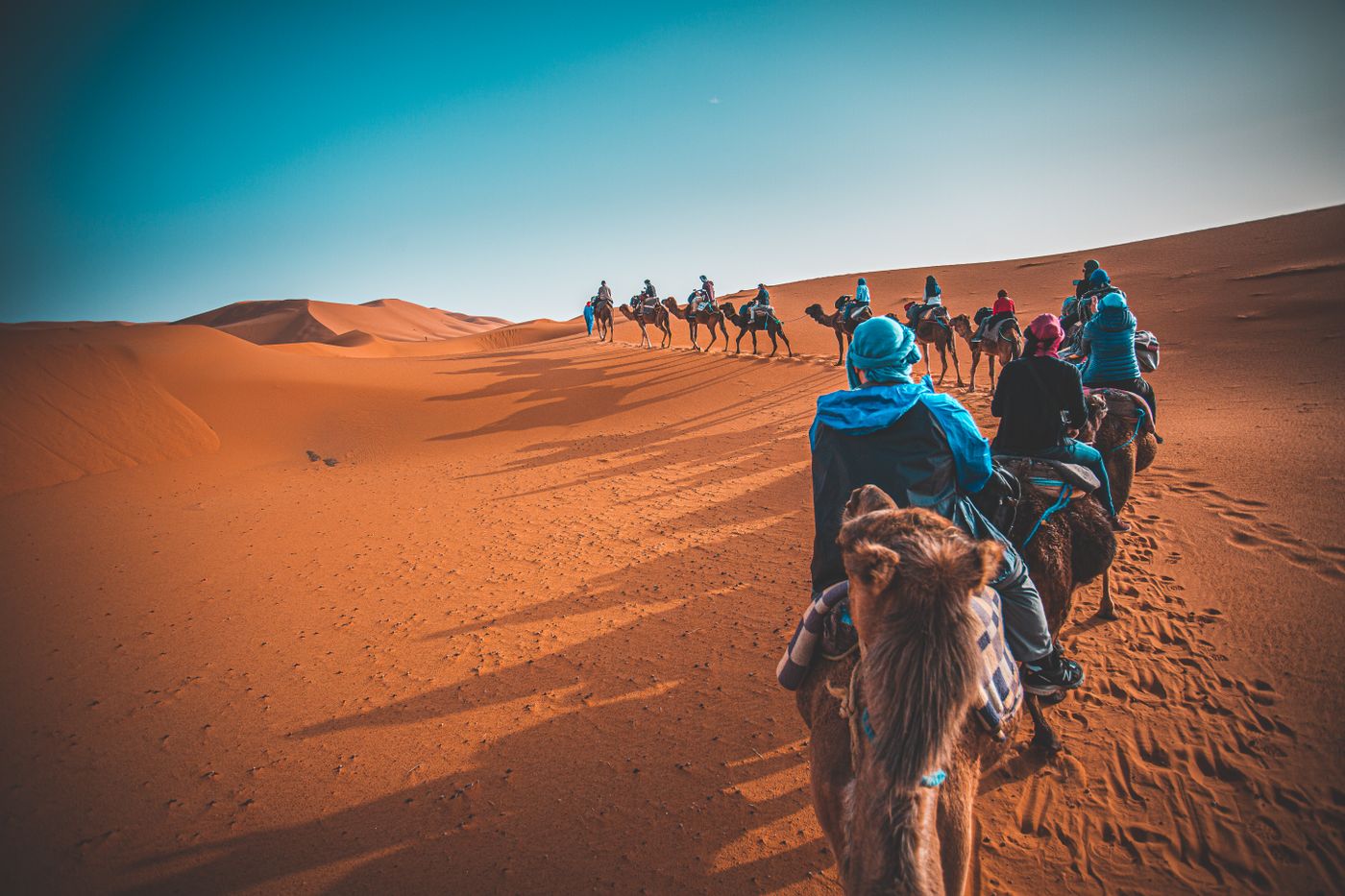
This is where the Sahara becomes an experience rather than a backdrop. Camel trek into the dunes of Erg Chebbi gives guests time to notice the scale of the dunes, the light and the quieter rhythm of the desert, with the exact camp and route details set out in the itinerary.
Merzouga and Erg Chebbi, Morocco
This is where the Sahara becomes an experience rather than a backdrop. Overnight in a Sahara desert camp gives guests time to notice the scale of the dunes, the light and the quieter rhythm of the desert, with the exact camp and route details set out in the itinerary.
Merzouga and Erg Chebbi, Morocco
This is where the Sahara becomes an experience rather than a backdrop. Sunrise over the dunes from the crest of Erg Chebbi gives guests time to notice the scale of the dunes, the light and the quieter rhythm of the desert, with the exact camp and route details set out in the itinerary.
Gallery
16 photos
Route & Map
Key locations on this journey. Markers show the verified waypoints available for this route; the map does not claim exact trail geometry.
Day-by-Day
This is a suggested itinerary. Every journey is adjustable — pace, activities, and accommodation.
Driving
6–7 hours total
Timing
Depart 08:00, arrive Dades by 17:00
Meals
Lunch, dinner
Accommodation
Guesthouse in Dades Valley
Notes: Long driving day. The road through the Atlas is winding — if you suffer from motion sickness, bring medication.
Walking
1 hour camel trek
Driving
4–5 hours
Elevation
Dunes up to 150 m high
Timing
Depart 09:00, camel trek starts 16:00–17:00
Meals
Breakfast, lunch, dinner
Accommodation
Sahara desert camp (private tent)
Notes: The camel trek takes about 1 hour. Wear long trousers and closed shoes — sand gets everywhere.
Driving
7–8 hours to Marrakech, or 6–7 hours to Fes
Timing
Sunrise 06:00–07:00 depending on season, depart Merzouga by 10:00
Meals
Breakfast
Accommodation
Not included
Notes: The return drive is long. Many travelers choose to continue to Fes rather than return to Marrakech — ask us about a one-way itinerary.
What You Will Experience
You will travel to Merzouga and transfer to camel or 4x4 for the journey into the Erg Chebbi dunes, typically arriving at a desert camp near or on the dunes for an overnight stay. The experience includes walking or riding camels across sand at sunset, climbing dunes for panoramic views, and sleeping in a fixed tent camp with shared or private berths and basic facilities. Meals are usually traditional tagines or couscous prepared by local cooks, and evenings feature campfire and, often, local Gnawa or Amazigh music. The night sky is exceptionally clear and dark away from any light source, making stargazing a highlight.
Journey character
Physical Demands
Long driving days (up to 7–8 hours on Day 1 and Day 3)
Winding mountain roads through the Atlas
1-hour camel trek — can be uncomfortable for those with back issues
Walking on sand at the dunes
Heat during the day, cold at night in the desert
Early starts for sunrise
Best Time to Go
The October-to-April window provides the only genuinely comfortable conditions for being outdoors in this part of the Sahara, with warm sunny days and cold nights, especially from December through February when temperatures can drop below freezing after dark. Spring and autumn shoulder months within this period offer the most pleasant balance of warm days and tolerable nights. Outside this window, from May through September, daytime heat becomes extreme and most organized desert activities are curtailed or shifted to dawn and dusk. Rainfall is rare at any time of year, but occasional winter storms can briefly affect desert tracks.
Is This Right for You?
Travelers who want to see the Sahara without a long trek
Those comfortable with long scenic drives
People who want a mix of landscapes and culture
Couples and families (children 8+ usually fine)
Those who get very car sick on winding roads
Travelers who prefer short driving days
Anyone who cannot sit on a camel for an hour
Those seeking active trekking rather than a road journey
What's Included
Private 4x4 vehicle with professional driver
Fuel and tolls
Camel trek to desert camp
Overnight in Sahara desert camp (private tent)
2 nights guesthouse accommodation
Breakfasts and dinners
Local guide at Aït Ben Haddou
Lunches
Personal non-alcoholic beverages
Travel insurance
Flights
Tips for driver and camp staff
Practical Information
One night in a guesthouse in the Dades Valley (comfortable, en-suite rooms) and one night in a Sahara desert camp (private tent with basic mattress and bedding, shared toilets). The camp is comfortable but not luxury — this is the desert.
Private 4x4 (Toyota Land Cruiser or similar) with a professional driver who knows the roads and the region.
Breakfasts and dinners included. Moroccan cuisine — tagine, couscous, soup, fresh bread, mint tea. Vegetarian options available. Lunches are at local restaurants along the route (not included).
What to Pack
Layers — warm jacket for desert nights, light clothes for daytime
Sun protection — hat, sunscreen, sunglasses
Scarf or shemagh for sand and wind
Comfortable walking shoes
Closed shoes for the camel trek
Reusable water bottle
Camera and power bank (limited charging at camp)
Wet wipes and hand sanitiser
Headlamp or small flashlight
FAQs
About 560 km. The journey takes two driving days with an overnight stop, because the route crosses the Atlas Mountains and passes through several gorges and valleys.
A private tent with a mattress, bedding, and basic shared toilet facilities. There is no electricity in the tents, though the camp dining area may have limited power. This is a desert experience, not a hotel.
We do not recommend June–August. Daytime temperatures in the desert regularly exceed 40°C. October to April is the best time.
Yes. Many travelers do this as a one-way journey. The drive from Merzouga to Fes is about 7 hours. Ask us to arrange this.
This is a starting point. We will tailor every detail to your dates, interests, and travel companions.
From
Marrakech
Related Journeys


