01
Journey stage
Visit the Rose Valley and Kelaat M'Gouna
The rose harvest is in April–May — this is the best time to visit.

A two-day journey to the Rose Valley at Kelaat M'Gouna — where the Dades Valley turns pink with rose blossoms in spring, and the Rose Festival in May.
Duration
2 Days
Difficulty
Easy
Elevation
Up to 2,260 m
Best Season
Apr–May (rose season)
Start
Marrakech or Ouarzazate
Private
Yes
Start
Marrakech or Ouarzazate
End
Marrakech or Ouarzazate
Distance
Approx. 350 km driving
Format
Private & customizable
Difficulty profile
A practical seven-step scale built from the route data on this page. It is intended to help you compare journeys, not to replace medical advice or a guide's on-the-ground assessment.
1/7
Easy
Easy
2 Days
Up to 2,260 m
Marrakech or Ouarzazate
Approx. 350 km driving
Apr–May (rose season)
Why this rating makes sense
With a difficulty rating of 1, this journey is accessible to most travelers. Walking is on flat valley paths and through town streets, with no significant elevation gain. The main considerations are the narrow timing window and the rural, basic nature of accommodation. It suits travelers interested in cultural and agricultural traditions rather than those seeking adventure or physical challenge.
The radar is a planning aid derived from the route information already published on this page; it is not a medical or technical grading.
Why This Journey?
This is for travelers who want to see the Valley of Roses — the Dades valley where damask roses are cultivated for the cosmetic industry. A spring journey when the valley blooms and the harvest begins.
Journey overview
Kelaat M'Gouna is the center of Morocco's rose industry. The valley around it turns pink in April and May with Damask roses, grown for their oil and water. The annual Rose Festival in May is one of the most beautiful events in Morocco — harvesters from the valley gather to celebrate, with music, dancing, and a rose queen. This journey visits the valley, the rose distilleries, and the surrounding landscape.
It is planned as a 2 days experience with the route beginning in Marrakech or Ouarzazate and finishing in Marrakech or Ouarzazate The listed difficulty is easy with a stated high point or elevation of Up to 2,260 m and an approximate distance of Approx. 350 km driving. The current itinerary data lists Apr–May (rose season) as the best season.
The journey is structured around Day 1: Marrakech or Ouarzazate to Kelaat M'Gouna (Marrakech → Tizi n'Tichka → Kelaat M'Gouna (or Ouarzazate → Kelaat M'Gouna)); Day 2: Rose Valley and return (Kelaat M'Gouna → Marrakech or Ouarzazate). Key elements include Visit the Rose Valley and Kelaat M'Gouna; See the Valley of Roses — where Morocco's rose water and oil are produced; Visit traditional distilleries; Walk through rose fields and palm oases.
This is for travelers who want to see the Valley of Roses — the Dades valley where damask roses are cultivated for the cosmetic industry. A spring journey when the valley blooms and the harvest begins. During the April to May rose season, expect to see fields of pink Damask roses being hand-picked at dawn by local workers. The journey typically includes visits to distilleries where rosewater and rose oil are produced using traditional steam methods, and the Rose Festival in Kelaat M'Gouna if timed correctly. Accommodation is in local guesthouses or small hotels in the valley. The journey also usually incorporates the nearby Dades Gorge with its dramatic rock formations. Food is standard Moroccan fare with rosewater flavoring some local dishes and teas. With a difficulty rating of 1, this journey is accessible to most travelers. Walking is on flat valley paths and through town streets, with no significant elevation gain. The main considerations are the narrow timing window and the rural, basic nature of accommodation. It suits travelers interested in cultural and agricultural traditions rather than those seeking adventure or physical challenge.
For the guest
For guests who want to understand Morocco rather than simply photograph it, this journey creates time for streets, architecture, local life and the historical context behind the places on the route.
If you are researching rose valley morocco, this page is designed to answer the questions that matter before booking: what the days feel like, who the route suits, what the route includes and what conditions to prepare for.
The practical side matters too: this is a easy journey over 2 Days, with the best travel window listed as Apr–May (rose season). With a difficulty rating of 1, this journey is accessible to most travelers. Walking is on flat valley paths and through town streets, with no significant elevation gain. The main considerations are the narrow timing window and the rural, basic nature of accommodation. It suits travelers interested in cultural and agricultural traditions rather than those seeking adventure or physical challenge.
About the Region
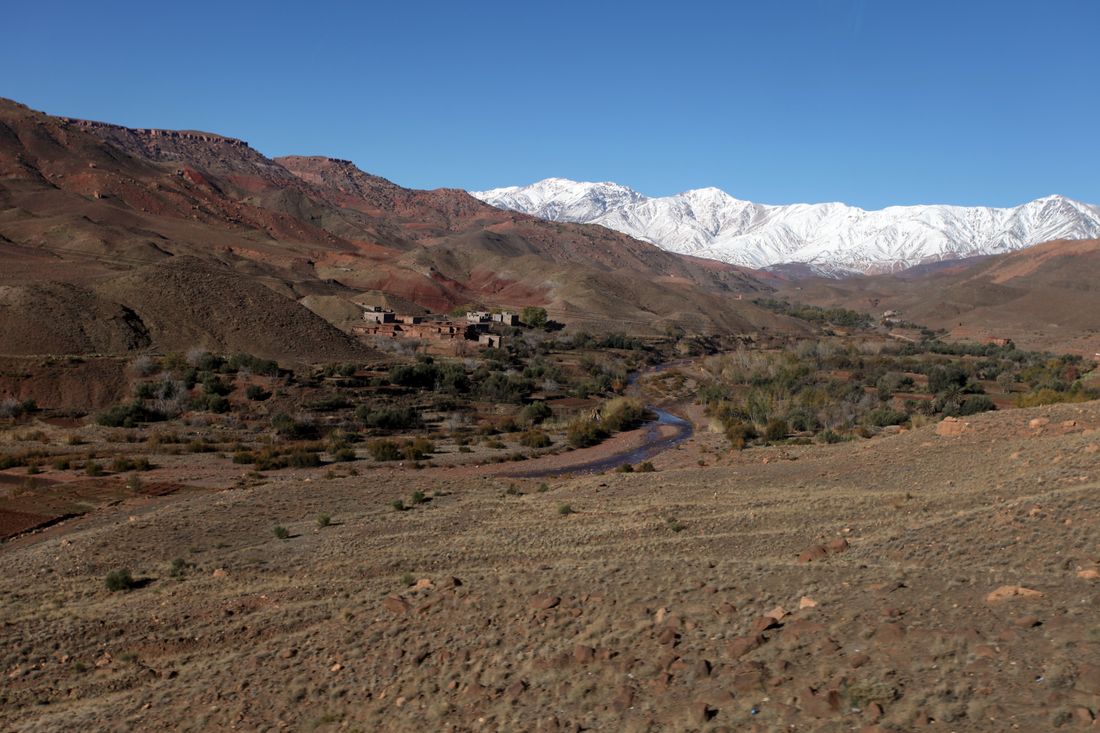
The Rose Valley lies in the Dades Valley near the town of Kelaat M'Gouna, between Ouarzazate and the Dades Gorge on the southern side of the High Atlas. The valley is fed by the Dades River and lined with irrigated fields, palm groves, and terraced agriculture. Damask roses, introduced from Persia centuries ago, grow along the irrigation channels and are cultivated by Berber farming communities. The landscape combines red rock gorges, green cultivated floors, and ochre kasbahs. The region sits at roughly 1,500 metres elevation with a dry, continental climate.
Continue planning Morocco
Compare this Valley of Roses Morocco tour with the places and practical guides that help travelers understand the route before booking.
Destinations on this route
Morocco travel guides
Journey highlights
A route-specific field guide built from the places, highlights and activities already recorded for this journey.
Journey stage
The rose harvest is in April–May — this is the best time to visit.
Journey stage
Kelaat M'Gouna hosts an annual Rose Festival in May.
Journey stage
Rose water and rose oil are produced using traditional methods.
Journey stage
The valley is beautiful year-round, but roses are seasonal.
Journey stage
This is for travelers who want to see the Valley of Roses — the Dades valley where damask roses are cultivated for the cosmetic industry. A spring journey when the valley blooms and the harvest begins.
Journey stage 1
Marrakech or Ouarzazate to Kelaat M'Gouna
Journey stage 1
Marrakech or Ouarzazate to Kelaat M'Gouna
Journey stage 1
Marrakech or Ouarzazate to Kelaat M'Gouna
Journey stage 1
Marrakech or Ouarzazate to Kelaat M'Gouna
Journey stage 1
Marrakech or Ouarzazate to Kelaat M'Gouna
Journey stage 2
Rose Valley and return
Journey stage 2
Rose Valley and return
Good to know
Travelers interested in the rose harvest
Good to know
Those who want to see traditional rose water production
Gallery
16 photos
Route & Map
Key locations on this journey. Markers show the verified waypoints available for this route; the map does not claim exact trail geometry.
Day-by-Day
This is a suggested itinerary. Every journey is adjustable — pace, activities, and accommodation.
Walking
2 hours
Driving
5–6 hours
Meals
Lunch, dinner
Accommodation
Guesthouse in the Rose Valley
Walking
2–3 hours
Driving
5–6 hours
Meals
Breakfast, lunch
Accommodation
Not included
What You Will Experience
During the April to May rose season, expect to see fields of pink Damask roses being hand-picked at dawn by local workers. The journey typically includes visits to distilleries where rosewater and rose oil are produced using traditional steam methods, and the Rose Festival in Kelaat M'Gouna if timed correctly. Accommodation is in local guesthouses or small hotels in the valley. The journey also usually incorporates the nearby Dades Gorge with its dramatic rock formations. Food is standard Moroccan fare with rosewater flavoring some local dishes and teas.
Journey character
Physical Demands
2–3 hours of walking per day
Flat terrain in the valley
Long driving days
Moderate pace
Best Time to Go
The April to May rose season is the only window when the harvest is visible, and the exact timing shifts each year depending on the bloom. The Rose Festival typically falls in mid-May and lasts three to four days. Outside this window, the distilleries operate year-round but the fields are bare and the festival atmosphere is absent. Spring temperatures in the valley are mild during the day and cool at night, making it a comfortable time to visit.
Is This Right for You?
Travelers interested in the rose harvest
Those who want to see traditional rose water production
Photography enthusiasts
Anyone who enjoys scenic valleys
Those who want active trekking
Travelers who dislike long drives
Those visiting outside rose season
What's Included
Private transport with driver
Guesthouse accommodation
Breakfast and dinner
Visit to a rose cooperative
Private vehicle with driver
Hotel pickup and drop-off
Visit to a rose water cooperative (in season)
Lunches
Personal non-alcoholic beverages
Travel insurance
Tips
Practical Information
Guesthouse in the Rose Valley — basic but comfortable.
Private vehicle with professional driver.
Breakfast and dinner at the guesthouse. Local cuisine with rose-flavored dishes.
What to Pack
Comfortable walking shoes
Sun protection
Light layers
Camera
Water bottle
FAQs
The rose harvest is in April and May. The annual Rose Festival in Kelaat M'Gouna is usually in May.
The annual Rose Festival in Kelaat M’Gouna typically takes place in early to mid-May, depending on the harvest. It features local music, dance, and a rose queen parade.
Yes — the valley produces rose water and rose oil sold in local shops and cooperatives.
This is a starting point. We will tailor every detail to your dates, interests, and travel companions.
From
Marrakech or Ouarzazate
Related Journeys