01
Mount Toubkal and the High Atlas, Morocco
Winter ascent of Mount Toubkal (4,167 m)
Winter conditions are serious — snow, ice, and cold are real dangers.
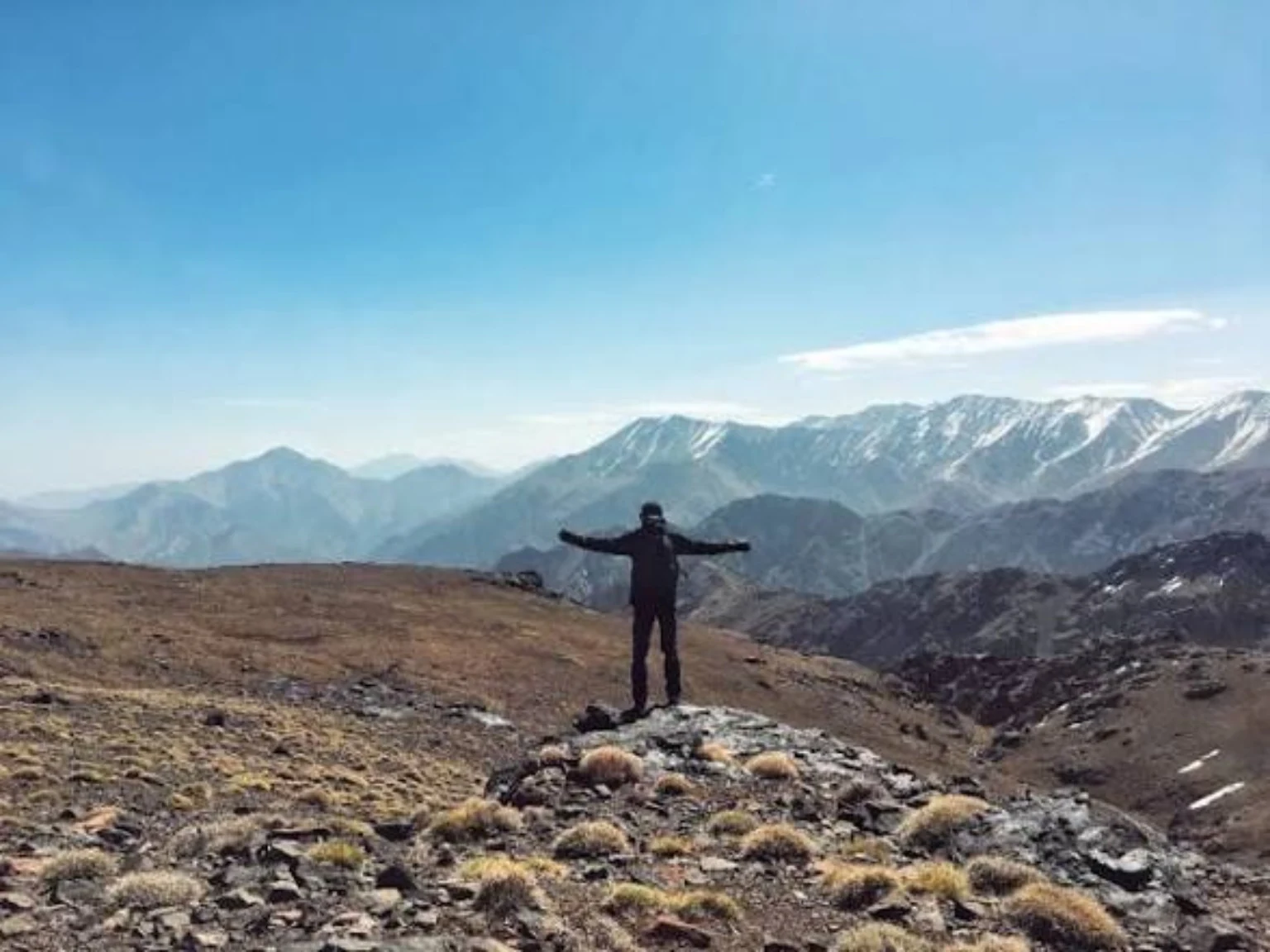
A winter mountaineering ascent of Mount Toubkal — crampons, ice axe, and snow conditions on the highest peak in North Africa.
Duration
4 Days
Difficulty
Advanced
Elevation
4,167 m
Best Season
Nov–Mar
Start
Imlil (1,740 m)
Private
Yes
Start
Imlil (1,740 m)
End
Imlil
Distance
Approx. 45 km
Format
Private & customizable
Difficulty profile
A practical seven-step scale built from the route data on this page. It is intended to help you compare journeys, not to replace medical advice or a guide's on-the-ground assessment.
7/7
Advanced
Advanced
4 Days
4,167 m
Imlil (1,740 m)
Approx. 45 km
Nov–Mar
Why this rating makes sense
Rated difficulty 7, this ascent is for experienced mountain walkers and those with prior winter mountaineering exposure. You must be comfortable using crampons and an ice axe, and physically capable of a sustained climb of over 1,000 meters of elevation gain at altitude in cold conditions. Prior summer Toubkal ascents or equivalent mountain experience are strongly recommended. This is not suitable for beginners, and even fit trekkers without winter mountain skills should not attempt it.
The radar is a planning aid derived from the route information already published on this page; it is not a medical or technical grading.
Why This Journey?
This is for experienced winter mountaineers who want Toubkal in proper winter conditions — snow, ice, and a real mountaineering objective. Not a trek. Not a walk. A winter climb on the highest peak in North Africa.
Journey overview
In winter (November–March), Toubkal becomes a real mountaineering objective. Snow and ice cover the upper slopes, the refuge is cold and often snowbound, and the summit requires crampons, ice axe, and winter skills. This is not a trek — it is a mountaineering route. You need winter experience and a qualified winter guide. The reward is a pristine, silent mountain in conditions that few travelers see.
It is planned as a 4 days experience with the route beginning in Imlil (1,740 m) and finishing in Imlil The listed difficulty is advanced with a stated high point or elevation of 4,167 m and an approximate distance of Approx. 45 km. The current itinerary data lists Nov–Mar as the best season.
The journey is structured around Day 1: Imlil to Neltner Refuge (Imlil → Neltner Refuge); Day 2: Acclimatisation and skills practice (Neltner Refuge area); Day 3: Winter summit attempt (Neltner Refuge → Toubkal Summit → Refuge); Day 4: Descent to Imlil and return to Marrakech (Neltner Refuge → Imlil → Marrakech). Key elements include Winter ascent of Mount Toubkal (4,167 m); Snow and ice conditions on the highest peak in North Africa; Crampon and ice axe techniques; Pristine winter mountain landscape.
This is for experienced winter mountaineers who want Toubkal in proper winter conditions — snow, ice, and a real mountaineering objective. Not a trek. Not a walk. A winter climb on the highest peak in North Africa. This is a winter mountaineering undertaking requiring crampons, ice axe, and full winter clothing. The approach from Imlil to the Toubkal Refuge takes most of a day on a trail that may be snow-covered above 2,500 meters. Summit day involves a pre-dawn departure, climbing steep snow slopes where the use of crampons and occasionally a rope may be necessary. Conditions can include ice, deep snow, and high winds, with visibility sometimes dropping to near zero. You will overnight in the refuge with basic facilities and no heating beyond what the warden provides. Rated difficulty 7, this ascent is for experienced mountain walkers and those with prior winter mountaineering exposure. You must be comfortable using crampons and an ice axe, and physically capable of a sustained climb of over 1,000 meters of elevation gain at altitude in cold conditions. Prior summer Toubkal ascents or equivalent mountain experience are strongly recommended. This is not suitable for beginners, and even fit trekkers without winter mountain skills should not attempt it.
For the guest
For guests choosing a Morocco trekking holiday, the value is in the rhythm of walking, the changing landscape and the chance to spend time in places that are easy to pass by on a road trip.
If you are researching toubkal winter, this page is designed to answer the questions that matter before booking: what the days feel like, who the route suits, what the route includes and what conditions to prepare for.
The practical side matters too: this is a advanced journey over 4 Days, with the best travel window listed as Nov–Mar. Rated difficulty 7, this ascent is for experienced mountain walkers and those with prior winter mountaineering exposure. You must be comfortable using crampons and an ice axe, and physically capable of a sustained climb of over 1,000 meters of elevation gain at altitude in cold conditions. Prior summer Toubkal ascents or equivalent mountain experience are strongly recommended. This is not suitable for beginners, and even fit trekkers without winter mountain skills should not attempt it.
About the Region
Mount Toubkal stands at 4,167 meters in the western High Atlas, roughly 70 kilometers south of Marrakech, and is the highest peak in North Africa. The Imlil valley serves as the standard starting point at approximately 1,740 meters. Winter transforms the massif into a snow-and-ice environment, with the upper mountain regularly under snow from November through March or April. Winds on the summit ridge can be severe, and wind chill can push effective temperatures well below freezing. The surrounding valleys see far fewer winter visitors, and the Toubkal Refuge above 3,200 meters remains the standard base.
Continue planning Morocco
Compare this Toubkal winter ascent with the places and practical guides that help travelers understand the route before booking.
Destinations on this route
Morocco travel guides
Journey highlights
A route-specific field guide built from the places, highlights and activities already recorded for this journey.
Mount Toubkal and the High Atlas, Morocco
Winter conditions are serious — snow, ice, and cold are real dangers.
Mount Toubkal and the High Atlas, Morocco
Your guide will assess conditions and may cancel the summit attempt if the weather is dangerous.
Journey stage
The refuge is cold — bring a warm sleeping bag.
Journey stage
Best from November to March.
Journey stage
Crampons and ice axe are essential — not optional.
Journey stage 1
Snow starts above 2,400 m. Crampons may be needed from here.
Journey stage 1
Snow starts above 2,400 m. Crampons may be needed from here.
Journey stage 1
Snow starts above 2,400 m. Crampons may be needed from here.
Journey stage 2
Acclimatisation and skills practice
Journey stage 2
Acclimatisation and skills practice
Journey stage 2
Acclimatisation and skills practice
Journey stage 2
Acclimatisation and skills practice
Good to know
Experienced winter mountaineers
Good to know
Those with crampon and ice axe experience
What to experience
A visual route guide built around the actual places and experiences named in this itinerary. Each photograph is chosen from the matching location pool, while the note beside it explains why that moment matters to a guest.
Mount Toubkal and the High Atlas, Morocco
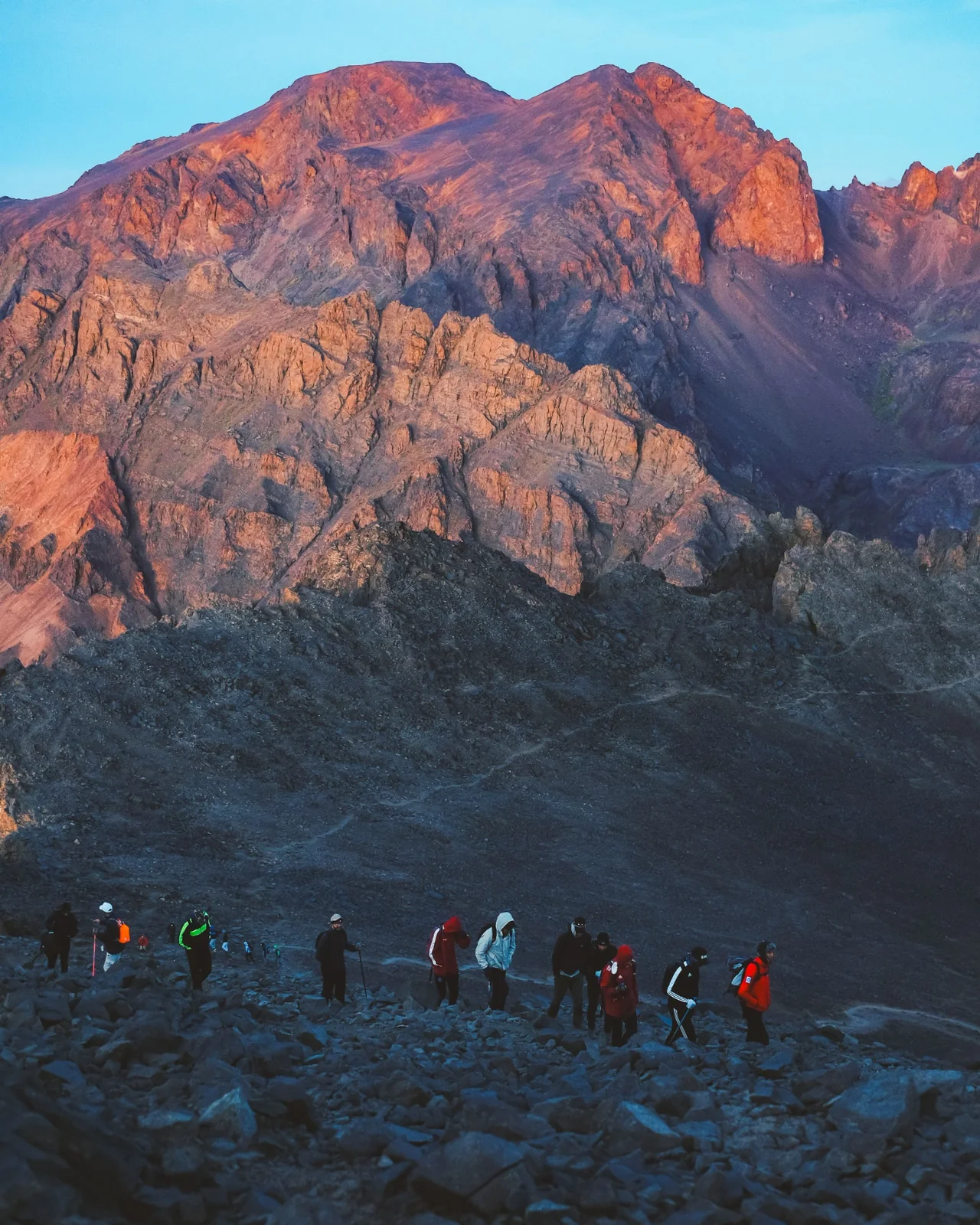
The point here is the effort as much as the view. Winter ascent of Mount Toubkal (4,167 m) is one of the journey’s defining moments, so guests should expect a slower, more deliberate pace and conditions that reflect the terrain and elevation described in the trip plan.
Mount Toubkal and the High Atlas, Morocco
The point here is the effort as much as the view. Snow and ice conditions on the highest peak in North Africa is one of the journey’s defining moments, so guests should expect a slower, more deliberate pace and conditions that reflect the terrain and elevation described in the trip plan.
Gallery
13 photos
Route & Map
Key locations on this journey. Markers show the verified waypoints available for this route; the map does not claim exact trail geometry.
Day-by-Day
This is a suggested itinerary. Every journey is adjustable — pace, activities, and accommodation.
Walking
5–6 hours
Driving
1.5 hours from Marrakech
Elevation
1,740 m → 3,207 m
Meals
Lunch, dinner
Accommodation
Neltner Refuge (dormitory)
Notes: Snow starts above 2,400 m. Crampons may be needed from here.
Walking
2–3 hours, light
Elevation
3,207 m
Meals
Breakfast, lunch, dinner
Accommodation
Neltner Refuge (dormitory)
Walking
8–10 hours, +960 m / -960 m
Elevation
3,207 m → 4,167 m → 3,207 m
Meals
Breakfast, lunch (packed), dinner
Accommodation
Neltner Refuge
Notes: Weather and snow conditions determine whether a summit attempt is safe. Your guide will make the call.
Walking
3–4 hours
Driving
1.5 hours
Elevation
3,207 m → 1,740 m → 466 m
Meals
Breakfast
Accommodation
Not included
What You Will Experience
This is a winter mountaineering undertaking requiring crampons, ice axe, and full winter clothing. The approach from Imlil to the Toubkal Refuge takes most of a day on a trail that may be snow-covered above 2,500 meters. Summit day involves a pre-dawn departure, climbing steep snow slopes where the use of crampons and occasionally a rope may be necessary. Conditions can include ice, deep snow, and high winds, with visibility sometimes dropping to near zero. You will overnight in the refuge with basic facilities and no heating beyond what the warden provides.
Journey character
Physical Demands
Winter mountaineering — snow, ice, and cold
Altitude up to 4,167 m
8–10 hours on summit day in winter conditions
Crampon and ice axe skills required
Cold nights at the refuge
Early starts (04:00 on summit day)
Best Time to Go
The November through March season is when winter conditions prevail, with the deepest snow typically in January and February. Early winter in November can be variable, with some years seeing full snow cover and others still having bare trails. Late season in March can offer warmer daytime temperatures but increasingly unstable snow as spring approaches. Conditions change rapidly and summit attempts are frequently turned around by wind or whiteout. Always check current conditions before committing.
Is This Right for You?
Experienced winter mountaineers
Those with crampon and ice axe experience
People with winter mountain fitness
Travelers who want Toubkal in proper winter conditions
Anyone without winter mountaineering experience
Those who dislike cold and snow
Travelers who prefer summer trekking
Anyone with limited mobility
What's Included
Qualified winter mountain guide
Crampons and ice axe (if needed)
Refuge accommodation
All meals during the trek
Round-trip transport Marrakech ↔ Imlil
Toubkal National Park entry fee
Flights and travel insurance
Accommodation in Marrakech
Personal winter trekking gear (boots, clothing)
Personal non-alcoholic beverages and snacks
Tips
Practical Information
Neltner Refuge — dormitory style. Cold in winter. Bring a warm sleeping bag (rated to -10°C).
Private vehicle from Marrakech to Imlil and return.
Hearty mountain food — hot soups, tagines, couscous, tea. Packed lunch on summit day.
What to Pack
Sturdy winter mountaineering boots
Crampons (compatible with boots)
Ice axe
Warm layers — fleece and down jacket
Waterproof shell jacket and trousers
Warm sleeping bag (-10°C rated)
Headlamp with spare batteries
Goggles or sunglasses (category 4)
Sun protection — high SPF sunscreen
First aid kit including blister treatment
Trekking poles
FAQs
Yes. You should have experience walking in crampons and using an ice axe for self-arrest. This is not a winter walk — it is a mountaineering route.
Your guide will assess conditions at 03:00 on summit day. If the weather is dangerous — high winds, heavy snow, or poor visibility — the summit attempt will be cancelled. Safety comes first.
Crampons and ice axe are provided if needed. You must bring your own winter mountaineering boots, clothing, and a sleeping bag rated to at least -10°C.
This is a starting point. We will tailor every detail to your dates, interests, and travel companions.
From
Imlil (1,740 m)
Related Journeys